



What does the term Pot Still mean?
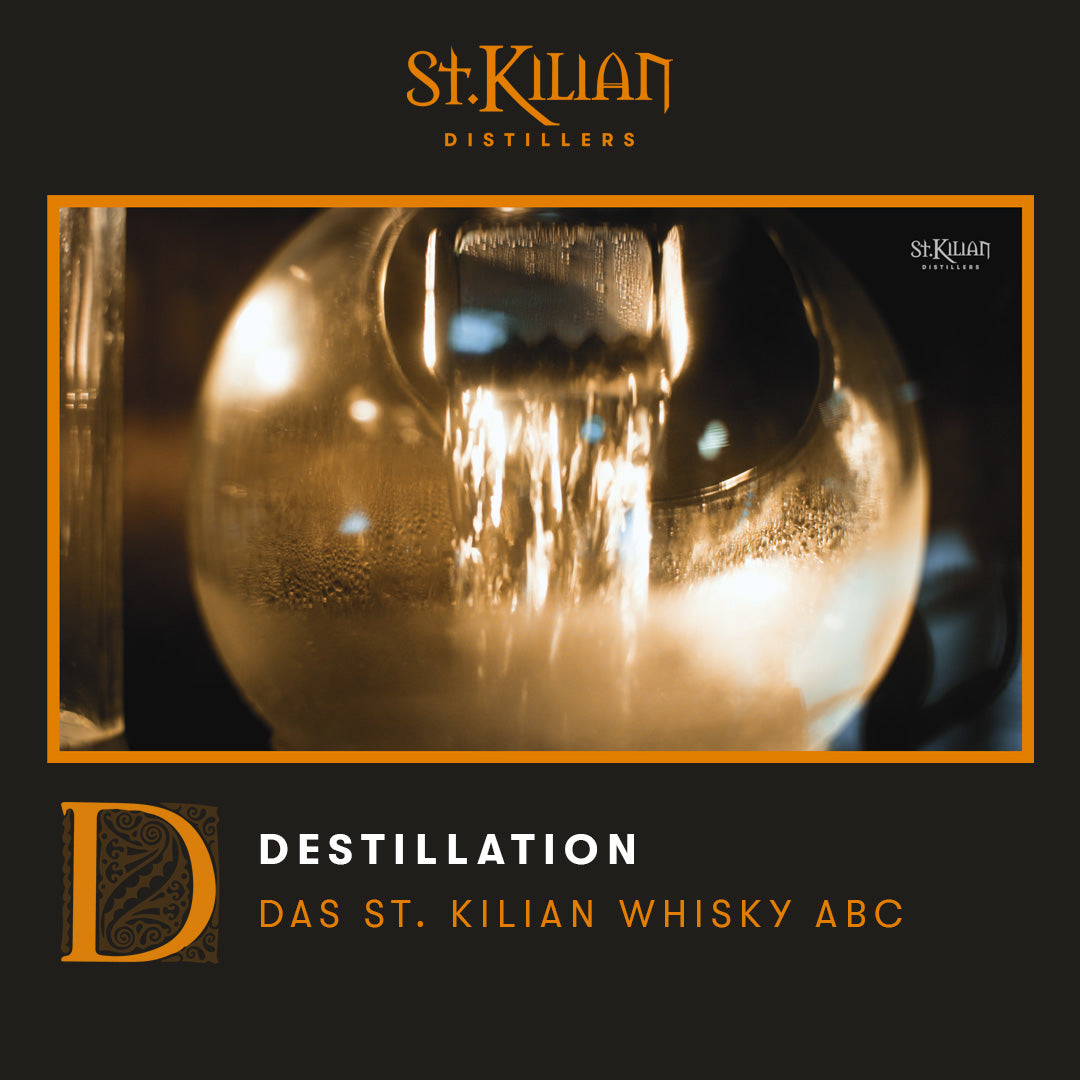
A pot still is a distillation apparatus used in the production of spirits, especially whisky. The name derives from the special shape of the apparatus, which resembles a large, bulbous pot. The pot stills are the heart of single malt whisky production at St. Kilian Distillers in Rüdenau.
Where does the Pot Still originate from?
Today's pot still is derived from the original form of a distillation apparatus, the alembic. With this simple apparatus, consisting of a pot (still body), a helmet (head), and a condenser, essential oils and perfume were already extracted by distillation in antiquity.
What material is the Pot Still made of?
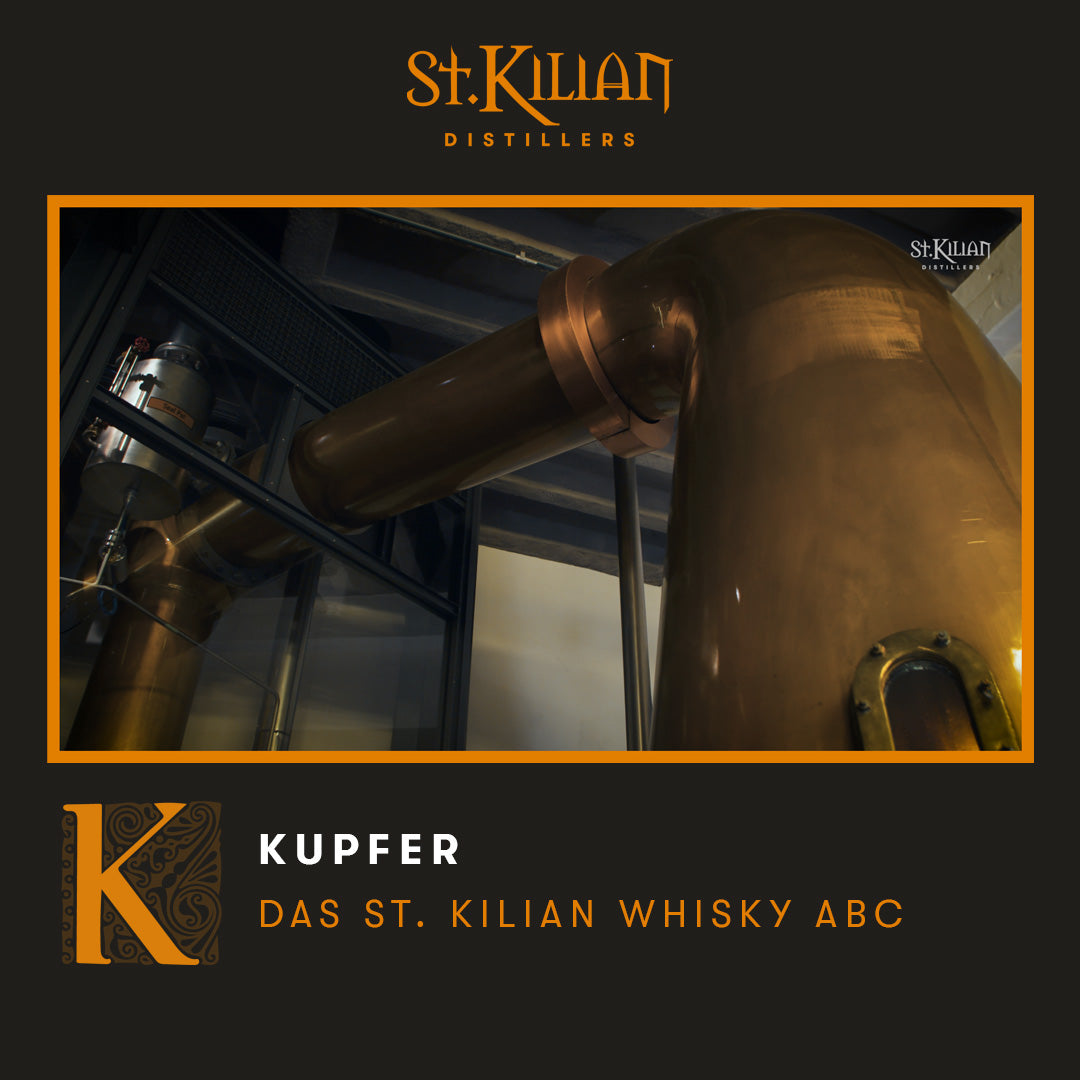
The pot still is made of elemental copper. In German, pot stills are therefore also called copper stills. When manufacturing a pot still, copper plates of about 4 mm to 6 mm thickness are riveted together and then hammered into the desired shape. This manual work is a very complex and costly, but indispensable process for the production of an individual pot still.
How many pot stills does St. Kilian Distillers have?
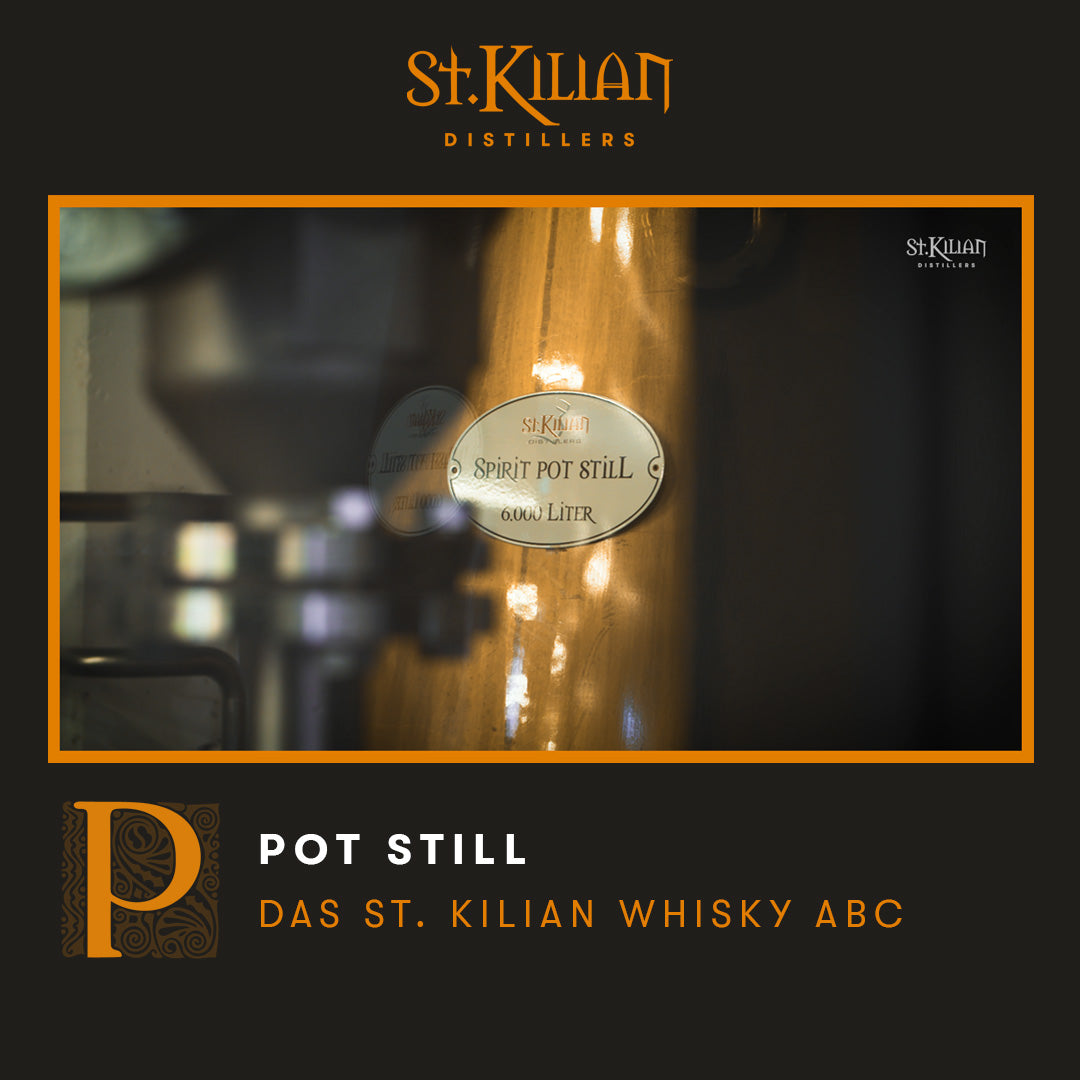
At St. Kilian, two copper stills are in operation – one wash pot still and one spirit pot still. Both stills are identical in shape and size and each have a capacity of 6,000 liters. They were manufactured in Speyside, Scotland, by the traditional coppersmiths Forsyths. For better cleaning and also for cosmetic reasons, both of our shiny copper pot stills are coated with a clear varnish on the outside.
What shape are the pot stills?
Our two stills have a pear shape and were designed by the Irish Master Distiller legend and mentor of St. Kilian Distillers, David F. Hynes. The size and geometry of the stills have been adapted to the given building structure of our production and are designed so that we obtain the fruity New Make Spirit we desire after double distillation.
How is a pot still constructed?
This distillation apparatus essentially consists of a pot, also called the lower shell. This contains the wash, which is lightly alcoholic beer with 8% Vol. and is heated. Connected to this pot is the neck of the still, the so-called swan neck, which usually tapers upwards and bends at the top. A copper tube, the so-called lyne arm, is attached to this, which at the other end is connected to a condenser – in St. Kilian's case, a vertical shell and tube condenser. In this condenser, the vapors generated during distillation are re-liquefied, i.e. condensed, by cooling with water.
What influence does the geometry of the pot still have on the spirit?
The part of the still from the top of the pot to the condenser has a major influence on the character of the resulting distillate. In addition to possible built-in baffles, such as bulges or constrictions at the lower end of the swan neck, the inclination of the lyne arm is of great importance. This is because the lyne arm conducts the alcoholic vapors to the condenser for cooling. However, since the ambient temperature around the lyne arm is significantly lower than the temperature in the copper pipe, the vapors cool down in the lyne arm and partially condense. With a slight downward inclination of the lyne arm, the vapor, even if it has already condensed in the lyne arm, reaches the condenser and is liquefied and collected there at the latest. If, on the other hand, the inclination of the lyne arm is slightly upward, as at St. Kilian Distillers, then the vapor condensed in the copper pipe can flow back into the still due to this slight gradient. There, this liquid is evaporated again at the prevailing temperature of 80°C to about 100°C in the pot of the pot still. This is called reflux.
What does reflux mean?
If more distillate flows back into the pot due to external cooling and the special geometry of the still, and is thereby heated and evaporated multiple times, then ultimately only the lightest vapors reach the condenser, are liquefied and collected there. This results in a light distillate. Light in the sense of easily volatile substances and aroma compounds that are obtained from the wash or, in the second distillation in the spirit still, from the low wines. Without the less volatile substances, which are retained by the reflux, the distillate tastes comparatively mild and fruity.
What does the Reflux Condenser do?
A special feature at St. Kilian is an additional cooling coil in the lyne arm of the Spirit Pot Still, the so-called Reflux Condenser. Cold water can be directed through this additional cooling device at a controlled flow rate. In this way, the reflux can be further increased or maximized with the help of the Reflux Condenser, resulting in a multiply distilled spirit. We refer to this as "multiple distilled". Only the lightest and lowest boiling substances ultimately reach the condenser and are liquefied there. The Reflux Condenser is an essential element for us to influence the spirit character during distillation.
How is the Pot Still heated?
While in the past pot stills were fired directly with wood, peat or later with gas, today the contents of the still are primarily heated indirectly by means of steam. At St. Kilian, heating plates are installed inside both of our pot stills, which are heated with 140°C hot steam generated by a flash evaporator.
What advantages does indirect heating of the pot still offer?
In contrast to direct heating, indirect heating by means of steam allows the temperature for heating the wash or low wines in the pot still to be controlled more precisely. This, for example, causes the wash to simmer more gently and evenly, and prevents solid components in the wash (e.g. yeast residues) from burning on the copper wall of the still, which would lead to undesirable aromas.
How is the Pot Still cleaned?
Inside both of our pot stills are several spray heads, which are used to clean the stills with water after distillation and emptying, preparing them for the next distillation. As additional cleaning agents, we use caustic soda and, more rarely, acid.

Leave a comment
This site is protected by hCaptcha and the hCaptcha Privacy Policy and Terms of Service apply.