


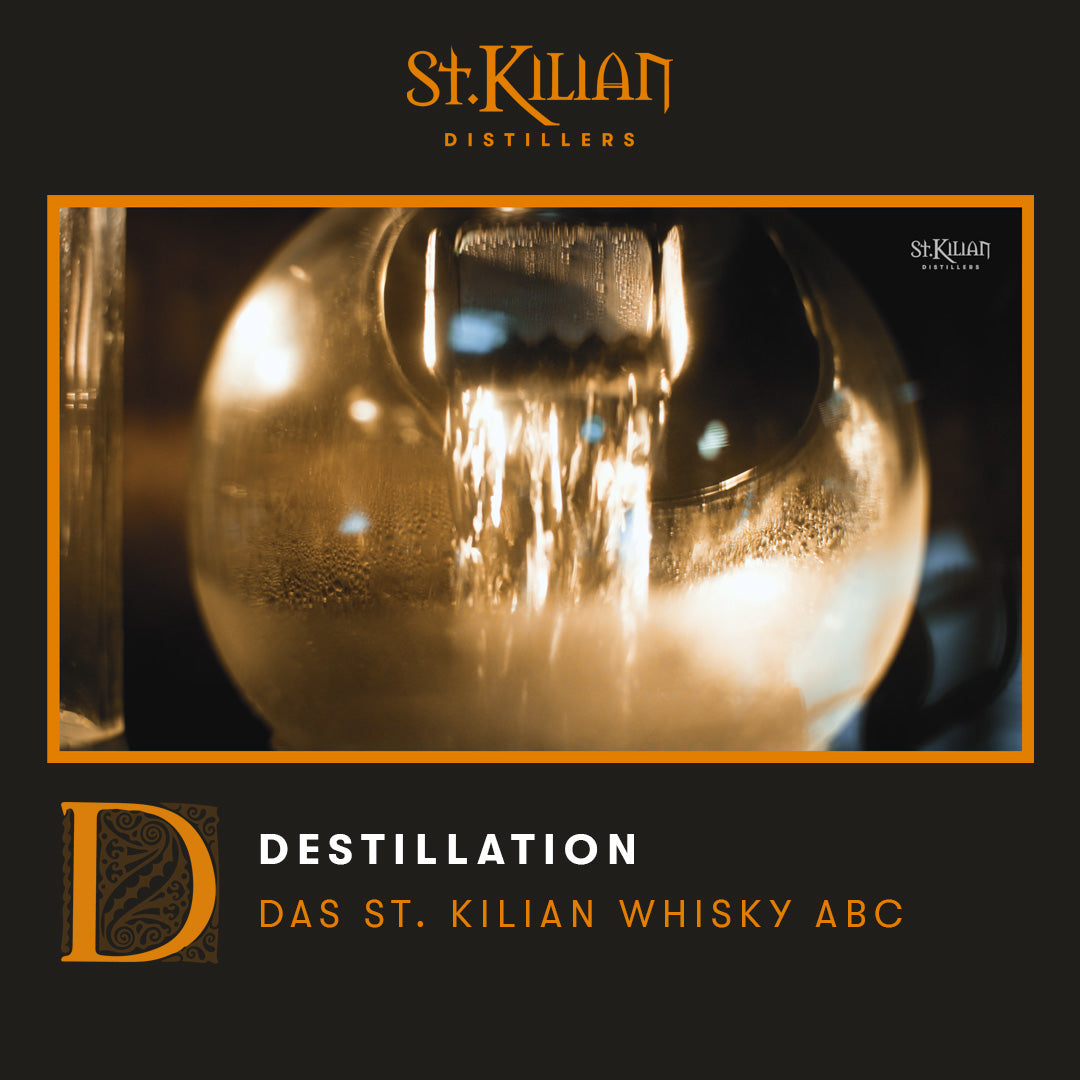

What is distillation?
Distillation is a physical process for separating liquids that have different boiling points. The principle is based on the fact that at a given temperature, the liquid with the lower boiling point (e.g., ethanol at 78.3°C) vaporizes first, while the liquid with the higher boiling point (e.g., water at 100°C) remains.
How does distillation work in a distillery?
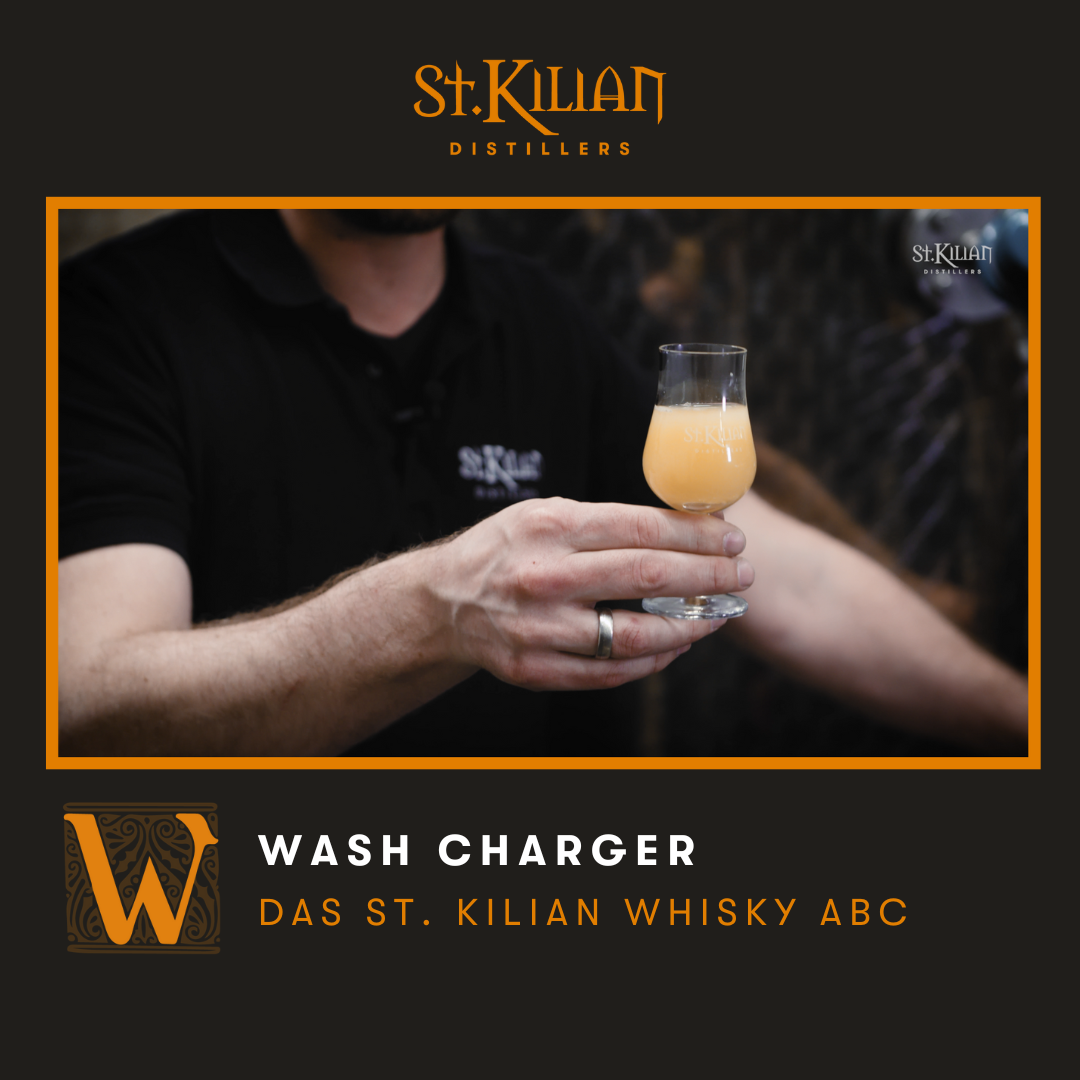
At St. Kilian Distillers, the fermented solution, the wash, is first heated in the first copper pot still (Wash Still). At an internal temperature of 78.3°C, the potable alcohol ethanol vaporizes and rises as vapor in the still. Since the wash contains many other alcohols and aroma compounds in addition to ethanol and water, which we would like to extract from the wash, the temperature in the Wash Still is continuously increased up to 102°C.
How is the vapor re-liquefied?
Once a liquid substance vaporizes, the vapors rise in the Pot Still, pass from the neck of the still and through the Lyne Arm into the tube bundle condenser, where they are re-liquefied by cooling with cold water and collected in a container.
How long has distillation existed?
The history of distillation dates back to antiquity, though its origins cannot be clearly attributed to a specific region. As early as the 2nd millennium BC, distillation was used in Mesopotamia, modern-day Iraq, to produce essential oils and perfume.
What equipment was used for distillation in the past?
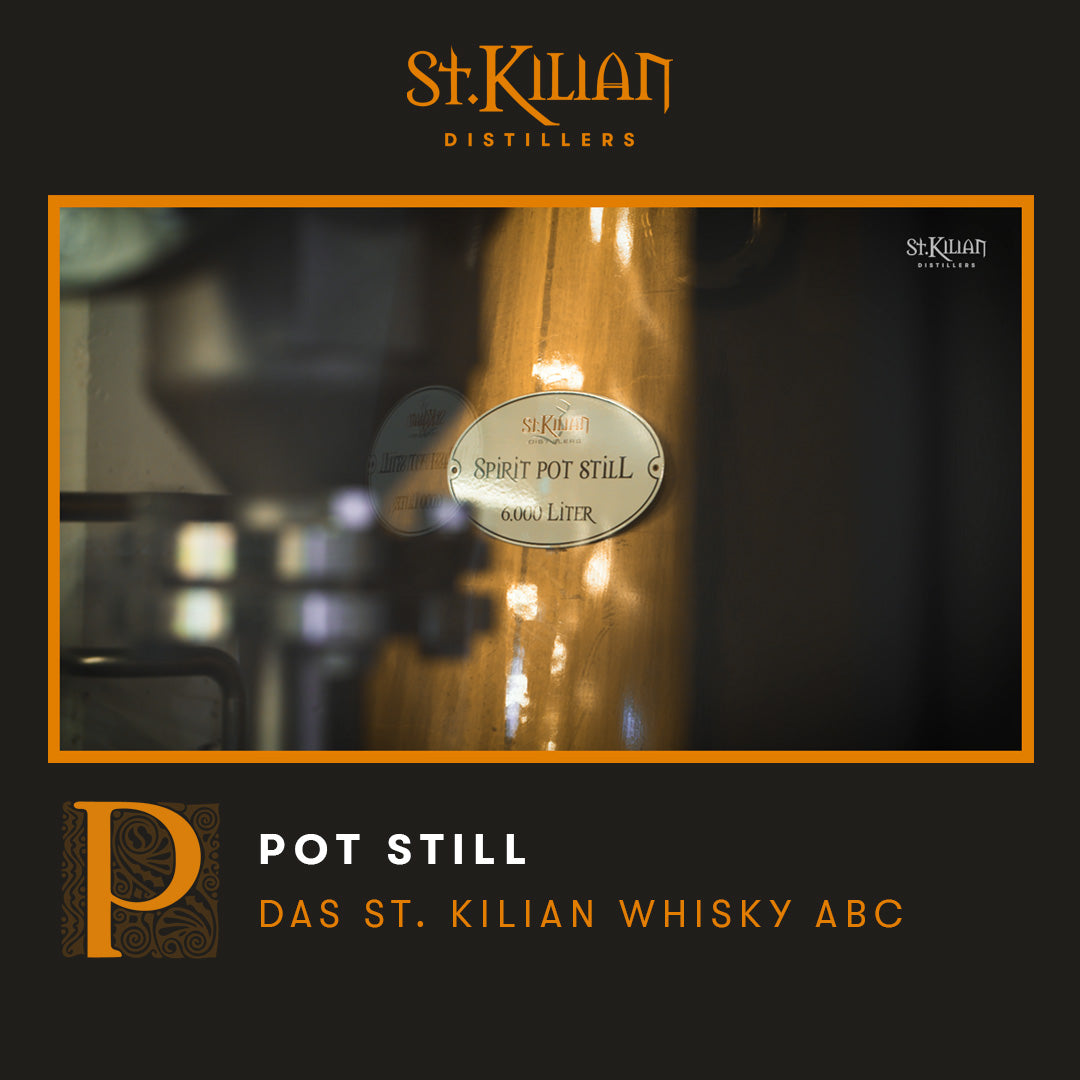
In the past, distillation was carried out in a so-called alambic (also alambic or alembic). This is a simple distillation apparatus, consisting of three components: a still body, a head, and a condenser. Today's copper Pot Stills at St. Kilian are essentially modeled after these ancient distillation apparatuses.
What are the advantages of Pot Stills?
For the production of single malt whisky, double distillation in copper Pot Stills offers the advantage over continuously operating distillation columns that this process achieves a rather rough separation of the various alcohols and aroma compounds in the wash. This means we do not get an overly pure and low-aroma, but rather a more substantial distillate, enriched with a certain proportion of less refined substances. This is intentional for us, as this distillate can then mature in wooden casks into a characterful and complex St. Kilian Single Malt Whisky.
What are their disadvantages?
Compared to other distillation apparatuses, such as the columns used in continuous distillation, Coffey Stills or Column Stills, distillation in Pot Stills involves significantly higher energy consumption and more time.
What happens with overly rapid distillation?
Regarding distillation speed, a gentle approach is the method of choice. Especially during the second distillation in the Spirit Still, the liquid content should not be heated too quickly. Because excessively rapid heating leads to rapid vaporization and carries undesirable compounds along with the desired alcohols and aroma substances. This excessively rapid distillation ultimately leads to a significant contamination of the distillate with a number of less refined compounds.
How often is distillation carried out at St. Kilian?
At St. Kilian, we distill twice. The wash, which is the slightly alcoholic beer after fermentation, is first distilled in the Wash Still, and the entire distillate is collected after cooling. In the second copper pot still, the Spirit Still, we separate the less refined, undrinkable, and sometimes even toxic substances in the foreshots and feints from the desired, noble aroma compounds in the heart, our core product. The heart is collected and later goes into casks for maturation. A small portion of the heart is bottled by us as New Make and can be tasted during tours of our distillery.
What happens to the foreshots and feints?
The foreshots and feints after distillation in the Spirit Still still contain a usable amount of desired aromas and ethanol in addition to the undesirable aroma compounds. For this reason, the foreshots and feints are added to the next distillate, which was obtained after the first distillation in the Wash Still, and distilled together again in the Spirit Still. This represents an extremely crucial factor for the quality of our St. Kilian Whiskies. This is the central system to preserve the aromas in the foreshots and feints – in addition to ethanol –.

Leave a comment
This site is protected by hCaptcha and the hCaptcha Privacy Policy and Terms of Service apply.