


Our Story
Single Malt Whisky
Made in Germany
How St. Kilian Distillers became what we are today
Three whisky connoisseurs, one idea. A village of 760,
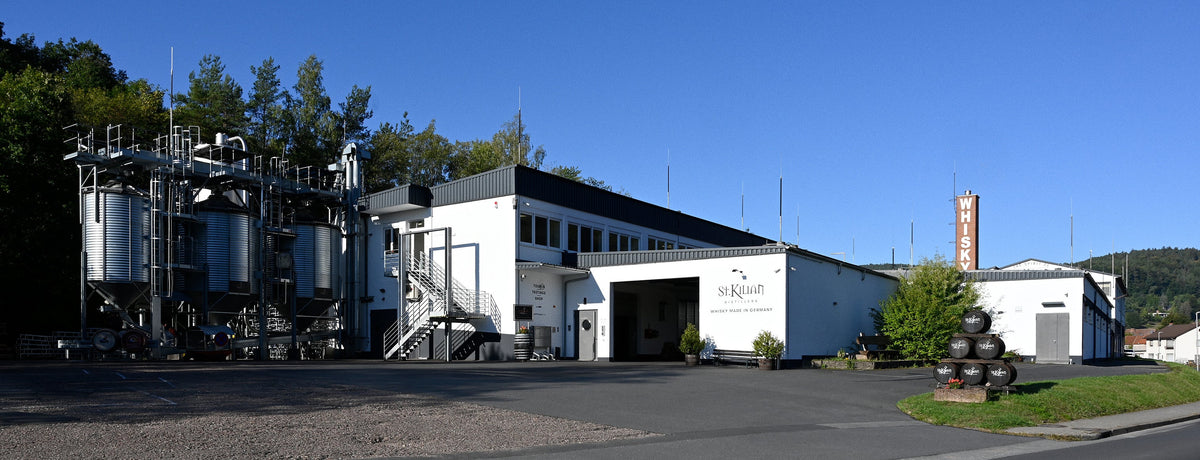
Germany's largest whisky distillery.
In the 7th century, three monks from Ireland Christianized Franconia. They brought with them "Aqua Vitae" – the water of life – and the technology to produce it. Did they manage to convince the pagans of Christianity with it? In the end, they became martyrs and are still revered today as the holy apostles of Franconia, St. Kilian, Kolonat, and Totnan.
Ireland was Christianized early, and so in the 6th century, Irish missionaries traveled as far as the Middle East. There, they discovered the art of distillation with the help of small copper pot stills from the Arabs. The alcohol extracted from it was enriched with spices, herbs, and flowers and served as perfume. The Irish monks drank it and found the "Aqua Vitae," as they called it in Latin, to be a formidable medicine for body and mind. From then on, with this acquired knowledge, Aqua Vitae was distilled and spread in the monasteries of Ireland using copper stills. A barley spirit, comparable to today's "New Make" (Spirit) of whisky distilleries.
How St. Kilian Distillers became what we are today
Three whisky connoisseurs, one idea. A village of 760,
Germany's largest whisky distillery.
In the 7th century, three monks from Ireland Christianized Franconia. They brought with them "Aqua Vitae" – the water of life – and the technology to produce it. Did they manage to convince the pagans of Christianity with it? In the end, they became martyrs and are still revered today as the holy apostles of Franconia, St. Kilian, Kolonat, and Totnan.
Ireland was Christianized early, and so in the 6th century, Irish missionaries traveled as far as the Middle East. There, they discovered the art of distillation with the help of small copper pot stills from the Arabs. The alcohol extracted from it was enriched with spices, herbs, and flowers and served as perfume. The Irish monks drank it and found the "Aqua Vitae," as they called it in Latin, to be a formidable medicine for body and mind. From then on, with this acquired knowledge, Aqua Vitae was distilled and spread in the monasteries of Ireland using copper stills. A barley spirit, comparable to today's "New Make" (Spirit) of whisky distilleries.
Three travelling monks with “Aqua Vitae” in their luggage on their way to Franconia
In the 7th century, the monks Kilian, Kolonat, and Totnan travelled to Franconia at the Pope's behest in Rome to Christianize the stubborn pagans there. All previous attempts had failed. All their predecessors ended up at the stake. However, for the first time, they had "Aqua Vitae" - the water of life - in their luggage, as well as a small copper still for its production. They presented their barley brandy as a gift to King Gosbert and his Queen Gailana at the court in Würzburg and reported on its healing effect on body and mind. The King and Queen, as well as all the vassals in the court, were immediately enthusiastic. Kilian and his brothers were allowed to establish the production of Aqua Vitae in Würzburg and use the drink to convince the pagan citizens of Christianity. High and low alike appreciated this new medicine for external but especially for internal use.
The legend of the origin of St. Kilian Whisky in Rüdenau
On their missionary journeys throughout Franconia, the monks also came to Rüdenau, the current location of our distillery. There they mixed their drink with the water from the Ottilienbrunnen, a healing spring where water gods had been worshipped long before, in the times of the Romans who guarded the Limes there. What exactly emerged there later is today a legend: St. Kilian Whisky. How the three monks eventually became martyrs, and why they are still revered as apostles throughout Franconia today, can be read in a small book available in our shop in Rüdenau.
Three men - one mission
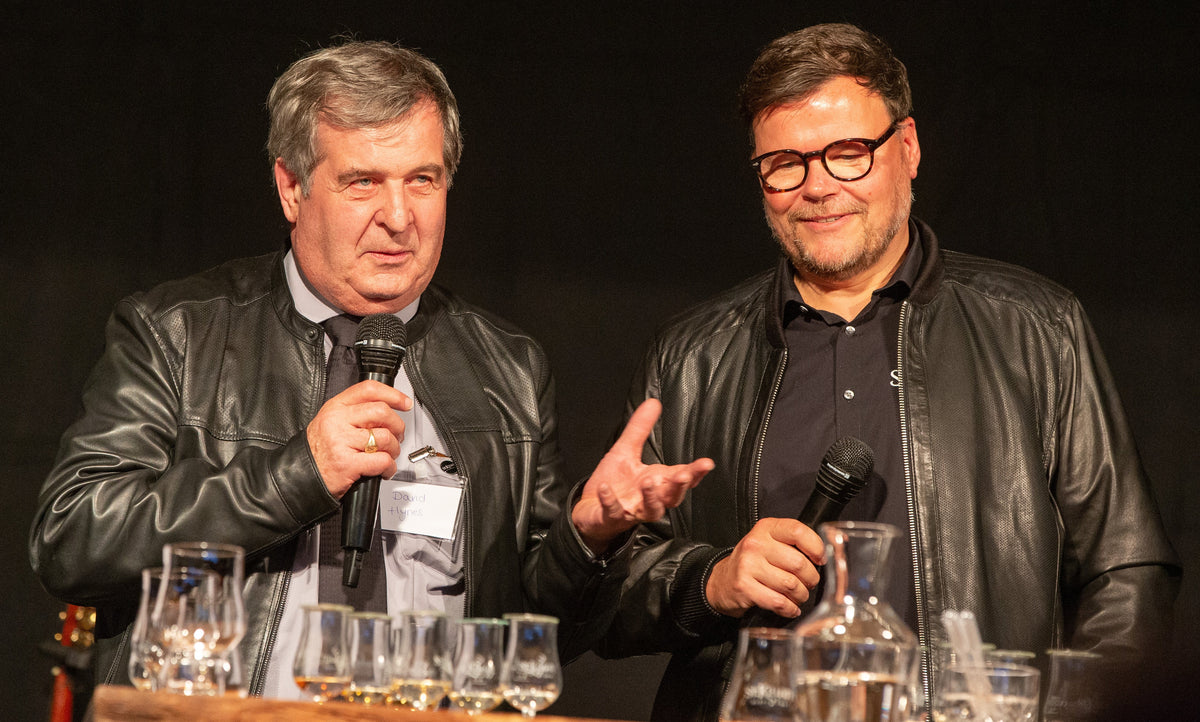
More than a thousand years later, three men with a shared mission came together again, who held "Aqua Vitae" very dear. Through maturation in casks, the art of whisky production in Germany had until then been advanced by distillers using local stills. However, copper pot stills and washbacks made of noble woods are needed to produce a complex single malt whisky using the original process from what is now Scotland and Ireland. Our founder Andreas Thümmler, a successful technology investment banker and passionate whisky collector, together with David F. Hynes, the Irish whisky legend from Dublin, had the idea and the plan in 2012 to establish Germany's largest whisky distillery in the beautiful Odenwald near Miltenberg am Main. They were joined by the brewmaster and master distiller Mario Rudolf from Amorbach.
The first “Spirit of St. Kilian” and many more Signature Editions
The three men put the plan into action, and after four years of construction, in 2016, the first Spirit of St. Kilian flowed from the distillery's two 6000-litre Forsyth copper stills in the peaceful whisky village of Rüdenau. In May 2019, the team presented its first three-year-old Single Malt Whisky, the "First Kilian". From then on, St. Kilian, with its Small Batch Signature Editions, set new quality standards in the production of "Whisky made in Germany". Our name "St. Kilian" is dedicated to the monk from Ireland and his brothers, who more than 1000 years earlier impressed and convinced us Germans of the miraculous qualities of Aqua Vitae. This is still our "Mission" today.