


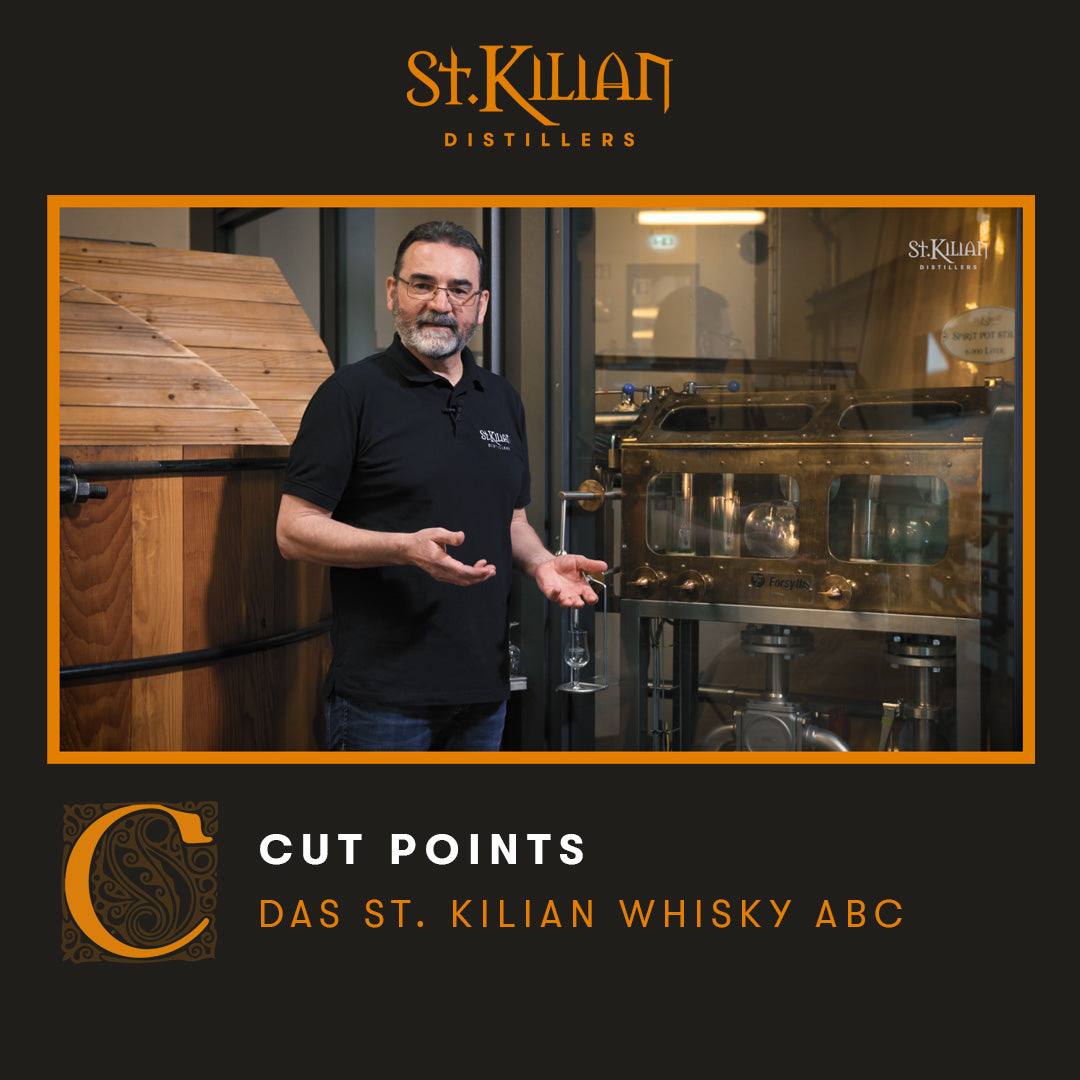

What are cut points?
Cut points are the English term for separation points or interfaces. In distillation - a separation process based on the different boiling points of the individual components of a mixture - they represent the temperature ranges at which different fractions of a liquid mixture are separated. The cut points are individually determined by each distillery to obtain a distillate with the desired characteristics at the end.
What is separated during distillation?
In whisky distillation, during the second distillation in the spirit pot still, the early foreshots and the late feints are separated from the desired middle cut, which is the heart of the distillation.
Why are there foreshots, middle cut, and feints in the second distillation?
During the distillation process, the liquid is heated. Those components with a lower boiling point evaporate first. These vapors rise in the still, pass through the Lyne Arm into the condenser, are condensed there by cooling, flow through pipes through the Spirit Safe, and then into a collection vessel. This is the highly alcoholic foreshots, which also contain toxic compounds. Subsequently, the desired components with medium boiling points, called the middle cut, boil. Later, those substances with higher boiling points enter the gas phase and are condensed again. This is called feints, which contain highly unattractive compounds from an aromatic point of view. Foreshots and feints are undesirable and must therefore be separated from the heart of the distillation.
How are the transitions of the individual fractions identified?
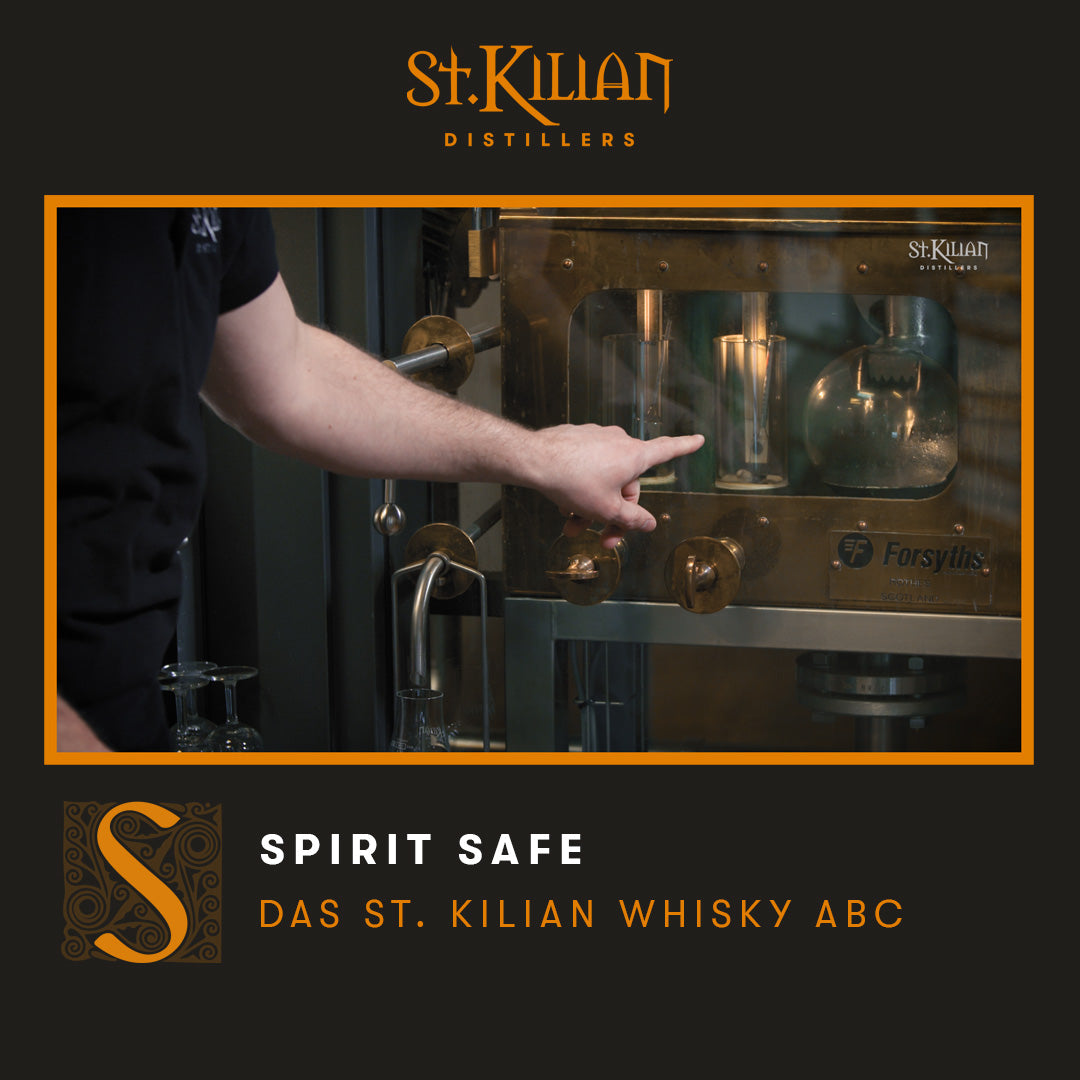
The determination of the two cut points during the second distillation in the spirit pot still at St. Kilian is carried out by sensory means. A defined amount of distillate flowing through the Spirit Safe can be drawn off via a lever attached to the Spirit Safe. The experienced distiller can then determine by smell and taste whether the respective transitions from foreshots to middle cut or from middle cut to feints have been reached.
What sensory properties do the different fractions possess?
The foreshots contain the low-boiling components of the liquid mixture and consist of chemical compounds such as acetaldehyde, dimethyl sulfide, or methanol. The foreshots have a pungent, solvent-like odor. The middle cut, on the other hand, is characterized by its fruity aromas. It contains, among other things, potable alcohol (ethanol) and various esters. Esters are chemical compounds known for their fruity aroma and pleasant taste and are therefore highly sought after by distillers. In addition, the middle cut also contains higher alcohols, so-called fusel oils, some of which also have fruity notes. The feints contain high-boiling compounds, such as further higher alcohols and fatty acid esters. The beginning of the feints has an unpleasant musty odor, reminiscent of wet cardboard.
How are these fractions physically separated?
Once the distiller has identified the transition from foreshots to middle cut after sensory testing, they operate a valve by flipping a small switch and pressing a button. This valve ensures that after passing through the Spirit Safe, the distillate no longer flows through a pipe that is ultimately connected to an intermediate receiver, but now reaches the collection vessel for the desired heart of the distillation (= "spirit receiver") via another pipeline. The same procedure occurs when switching from middle cut to feints. Foreshots and feints are collected together in the intermediate receiver.
At what alcohol percentages are the cut points?
At St. Kilian, the alcohol content at the first cut point, i.e., the transition from foreshots to middle cut, is approximately 72 percent by volume. The transition from middle cut to feints occurs at approximately 59 percent by volume alcohol. Depending on the composition of the barley malt in the mash, the "mashbill," and whether mild (unpeated) or peated malt is processed, these cut points may vary.
What happens to the foreshots and feints?
The foreshots and feints fractions still contain certain amounts of ethanol and desired aromas. Therefore, they are combined with the low wine obtained after the first distillation of the next batch of wash and then fractionally distilled in the Spirit Pot Still, as described above. These amounts of separated foreshots and feints are always roughly the same, as a certain balance is established. This is because certain noble components from the foreshots and feints, such as ethanol and desired aromas, transfer into the heart of the distillation during repeated distillation.

Leave a comment
This site is protected by hCaptcha and the hCaptcha Privacy Policy and Terms of Service apply.