


What does Spirit Safe mean?
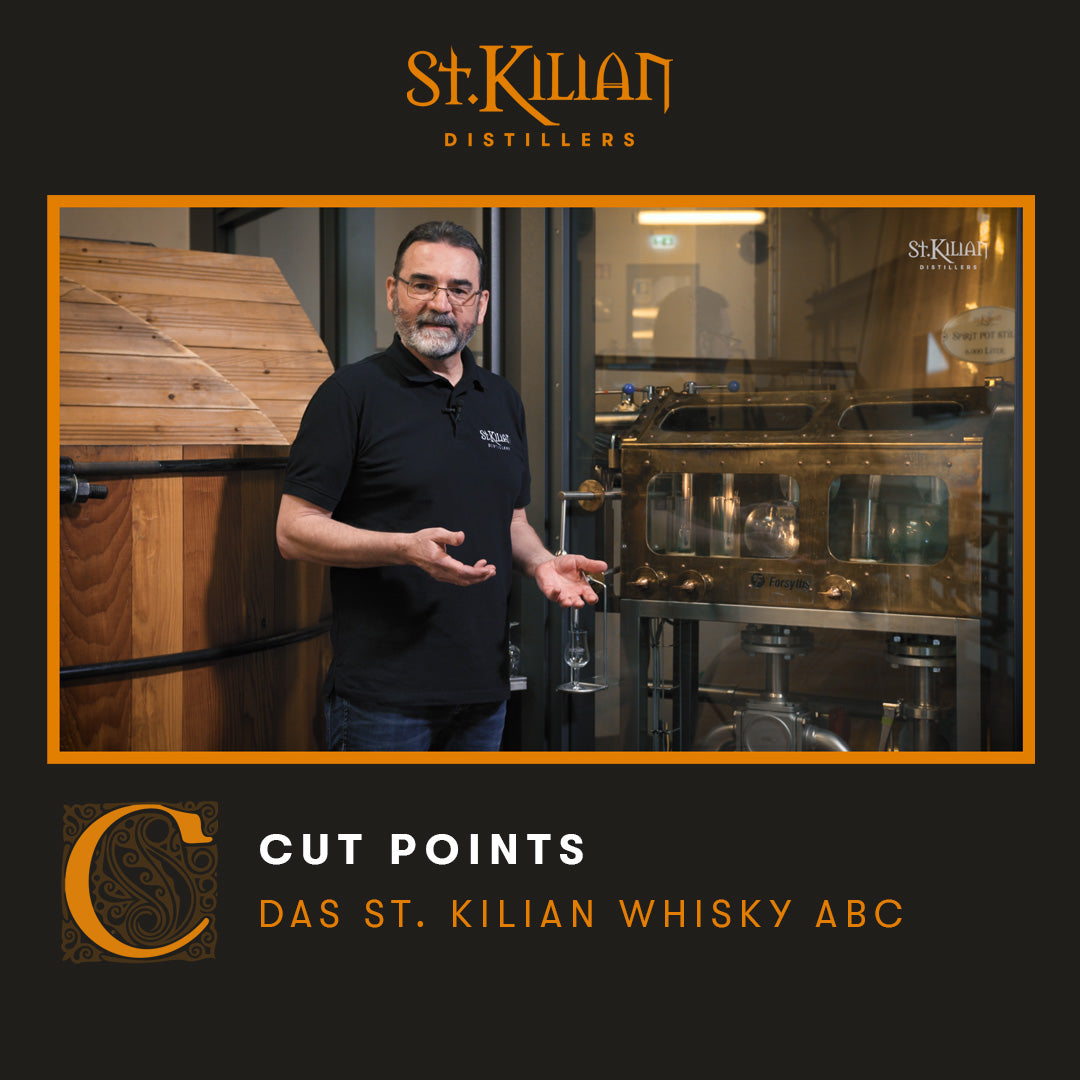
A spirit safe is the English term for a sealed device that represents the central element of a distillation apparatus in the still house.
What does a spirit safe look like?
The spirit safe is a lockable, usually brass, cuboid box with viewing panes that contains several glass vessels through which the fresh, colorless distillate obtained during distillation flows.
What is the function of the spirit safe?
The alcohol content of the distillate can be determined in the spirit safe by measuring its temperature and density. The main function of the spirit safe is to control and monitor the distillation process to ensure that the desired new make spirit (middle cut, heart) is collected and separated from the unpalatable foreshots and feints.
Why is the spirit safe at St. Kilian in a sealed room?
In Germany, with the exception of 'Abfindungsbrennereien' (small distilleries where alcohol tax is calculated as a lump sum based on the type and quantity of raw materials processed), alcohol can only be produced in bonded distilleries. St. Kilian Distillers is, from a customs perspective, such a bonded distillery, which was sealed with official cooperation before commissioning. Therefore, our distillation plant – meaning the spirit pot still and the spirit safe – has been sealed by the customs administration in a room to prevent the extracted alcohol from being removed unnoticed.
How does the spirit safe work during the first distillation?
During the first distillation in the wash pot still, the vapors in the connected condenser are re-liquefied by cooling and flow through corresponding pipes through a glass vessel located on the right side of the spirit safe. By turning an externally mounted lever, part of the distillate in the spirit safe can flow into and fill a cylindrical glass container. This glass cylinder contains two measuring instruments: a thermometer and a hydrometer. By measuring the temperature and density of the distillate, the current alcohol content can be determined with the help of measurement tables. Another turn of the lever ensures that the glass cylinder empties and its contents are reunited with the rest of the distillate. Distillation in the wash still continues until the alcohol content of the distillate is below 0.2% by volume.
Where does the distillate from the first distillation go?
The distillate after the first distillation in the wash still flows through the spirit safe via a pipe into a stainless steel tank below, known as the "intermediate receiver", where it is temporarily stored. The contents of this intermediate storage tank are used for the second distillation in the spirit still.
How does the spirit safe work during the second distillation?
The low wine from the first distillation is combined with the foreshots and feints of the previous second distillation and pumped into the spirit still. The vapors during the second distillation are also liquefied in the condenser and then flow through a glass vessel on the left side of the spirit safe. The distillate after the second distillation in the spirit still is called high wine.
What needs to be considered for the spirit run?
For the spirit run, it is important that the highly alcoholic and sometimes toxic foreshots, as well as the low-alcohol and largely unpalatable feints, are separated from the desired middle cut, the heart.
How is this separation done?
The separation, known as the "cut", is done sensorily. A sample of the current distillate in the spirit safe can be taken via a lever located on the left side of the spirit safe. The extraction volume is recorded for customs purposes and counted towards the total amount of distilled alcohol. This extracted sample can then be subjected to a smell and taste test by the distiller.
How is the cut from foreshots to middle cut made?
If the sensory inspection shows that the transition from the foreshots to the desired middle cut has been reached, there is the possibility to activate a valve by flipping a small switch and pressing a button. This valve ensures that the distillate, after passing through the spirit safe, no longer flows through a pipe that is ultimately connected to another stainless steel container for intermediate storage, but instead reaches the collection vessel for the heart, the spirit receiver, via a different pipe. This pipe to the spirit receiver is coupled with an alcoholmeter for precise determination of the alcohol quantity.
How is the cut from middle cut to feints made?
If the sensory test of the distillate indicates that the heart of the run has ended and the feints are approaching, the valve is switched again by operating the small switch and pressing the button so that the distillate flowing through the spirit safe is collected again in the intermediate tank.
What happens to the foreshots and feints from the intermediate tank?
Since the foreshots and feints after the second distillation still contain a usable amount of desired aromas and alcohol in addition to the undesirable flavor compounds, both are added to the next distillate obtained after the first distillation in the wash still and thus distilled again in the spirit still.
Why are there two glass cylinders in the spirit safe for the second distillation?
Since the foreshots have a high alcohol content (around 70% by volume), but the feints have a significantly lower one, two different hydrometers with appropriate fine scaling are needed in addition to a thermometer for the respective measurement of the distillate's density. Therefore, two glass cylinders are installed on the left side of the spirit safe, so that after filling the first or second container, the alcohol content of the foreshots or feints can be precisely determined at all times during distillation by measuring the respective density and temperature.
Where does the St. Kilian spirit safe come from?
We sourced the spirit safe from the Scottish company Forsyths directly from Speyside. This renowned coppersmith also manufactured and delivered our two copper pot stills to Rüdenau.
Does the spirit safe fulfill another function?
Yes! In addition to the aforementioned features, this central element of distillation is also a visual highlight for all visitors to our St. Kilian Distillery.

Leave a comment
This site is protected by hCaptcha and the hCaptcha Privacy Policy and Terms of Service apply.