


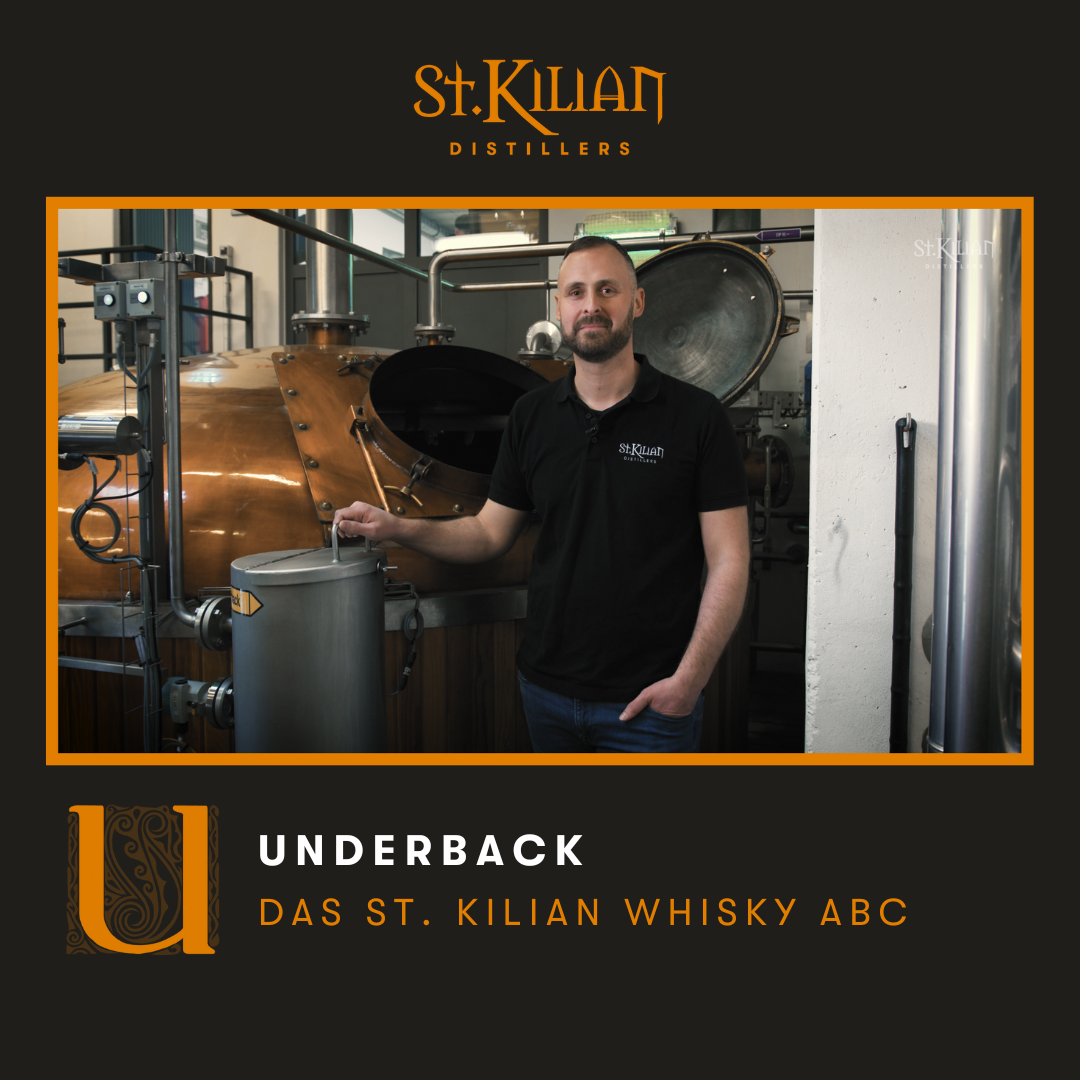

What is a washback?
A washback is a large container or tank used in the production of whisky. The German term for a washback is Gärbottich (fermentation vat).
What happens in a washback?
Alcoholic fermentation, also known as primary fermentation, takes place in a washback. During this process, the sugars and amino acids dissolved in the aqueous wort are biochemically converted into alcohol (ethanol), carbon dioxide, and a range of different aromatic compounds by adding yeast, generating heat.
What is a washback made of?
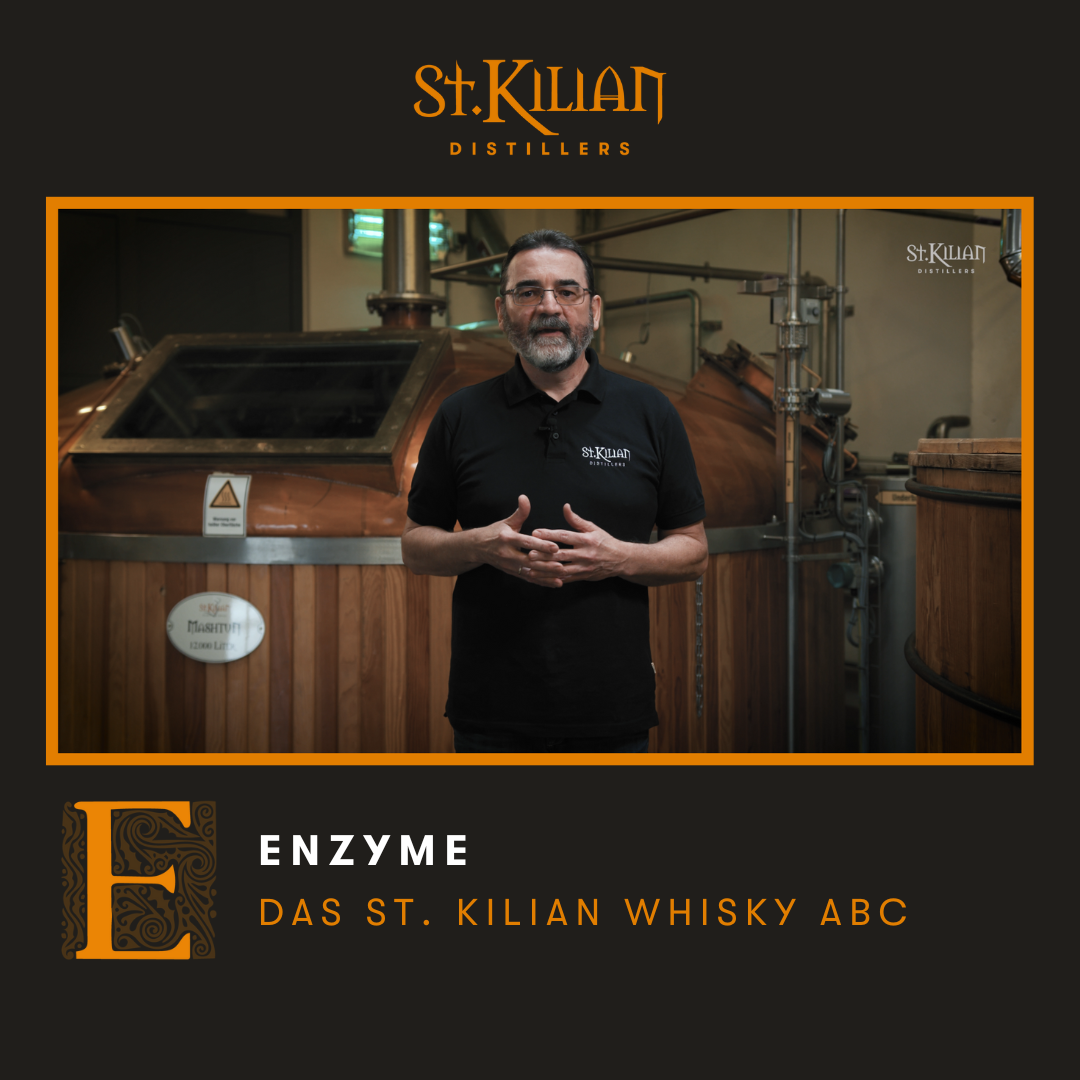
Two types of washbacks are used in the whisky industry. They are either made of stainless steel or wood. At St. Kilian Distillers, the washbacks are made of Douglas fir wood. This is also known as Oregon Pine, as this conifer mainly grows in the western regions of North America. The individual staves are held together by iron rings to ensure the impermeability of the fermentation vessels. In addition, reed strips between the individual staves provide an extra seal. If the washbacks are out of operation for longer periods, water must be added so that the wooden staves remain swollen and thus the impermeability of the fermentation vessels is maintained. All four washbacks each have a multi-part lid made of spruce wood.
Where do the washbacks come from?
The four fermentation vats at St. Kilian Distillers come from Scotland. The company Joseph Brown (JB) Vats from Dufftown in the heart of Speyside built these washbacks, each with a capacity of 10,800 litres. After their completion, they were transported directly to Rüdenau by low-loader, mounted on steel pedestals there, and connected to the distillery's piping system.
What is special about the washbacks?
At St. Kilian, we have made some additional installations in our washbacks. An agitator at the bottom of the fermentation vats ensures better homogeneity and thus an ideal distribution of the yeast in the fermentation vat, so that the yeast cells can perform their biochemical work optimally. The agitators are designed to be very gentle and slow-rotating. This minimizes shear forces on both the wash and the yeast. Two built-in stainless steel cooling plates make it possible to maintain the perfect fermentation temperature for us during fermentation. A thermal sensor is also located on the side of the staves, which measures the temperature in the wash and, if necessary, sends a signal to the cooling plates so that the fermentation temperature can be readjusted. The foam generated during fermentation is mechanically broken up by a rotating iron pipe above the liquid level to prevent the washback from overflowing. After fermentation, the yeast cells at the bottom are stirred up by the built-in agitator, which facilitates pumping out the resulting approximately eight percent beer.
What is carbon dioxide?
Carbon dioxide is a gas that is produced as a by-product of alcoholic fermentation. It is colourless, odourless, and tasteless. However, carbon dioxide is harmful to health in higher concentrations: headaches occur when the proportion of carbon dioxide in inhaled air reaches about five percent. Prolonged inhalation of higher concentrations of about eight percent or more can lead to death.
How is carbon dioxide removed from the washbacks?
On the side of our wooden washbacks, there are several connections with pipes that lead into a larger collection pipe. Through this collection pipe and its slope, the carbon dioxide, which is heavier than air, escapes outside into the open.
How are the washbacks cleaned?
After fermentation, the washbacks, emptied through the bottom, are first rinsed with cold water and then cleaned with hot steam at over 85°C for about 30 minutes with the lid closed. Since Douglas fir wood does not have an absolutely smooth surface, yeasts and bacteria – especially lactic acid bacteria – can survive this steam procedure in the microscopically small holes of the wood and later, especially with our long fermentation times of 65 hours, contribute to the complexity of the wash.


Leave a comment
This site is protected by hCaptcha and the hCaptcha Privacy Policy and Terms of Service apply.