



What is fermentation?
Fermentation is a biological process in whisky production where yeast converts the sugars in the wort into alcohol (ethanol). The term comes from the Latin (fermentum) and translates to "gärung" (fermentation).
What are yeasts?
Yeasts belong to the class of ascomycetes, which are one of the major divisions in the kingdom of fungi. They are single-celled microorganisms, meaning they consist of only a single cell. The most commonly used yeast for fermenting beer, wine, and whisky is Saccharomyces cerevisiae.
Where does fermentation take place?
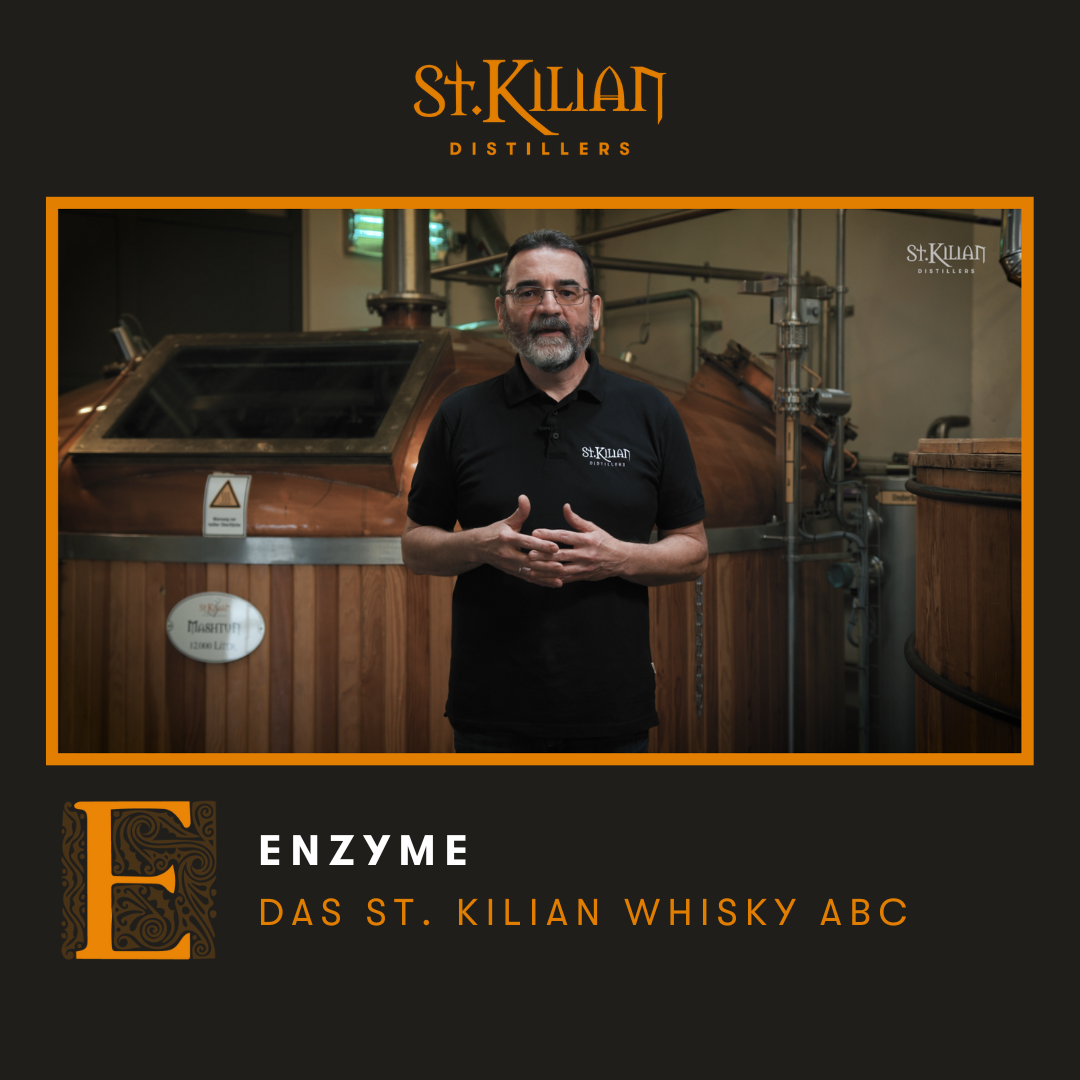
Fermentation, i.e., alcoholic fermentation, takes place at St. Kilian Distillers in wooden washbacks. These 10,800-liter fermentation vats made of Douglas fir wood are filled with the sugar-containing wort obtained after mashing and lautering, and simultaneously, the required amount of dry yeast M1 is added.
How does yeast work?
The biological purpose of yeast is to divide – and for this, it needs energy. It obtains this energy by metabolizing the sugars contained in the wort. Yeast can generate energy through both respiration and fermentation. Yeast is the only living microorganism capable of metabolizing sugar both in the presence of oxygen (aerobic conditions) and in its absence (anaerobic conditions).
What happens in the presence of oxygen?
In the presence of oxygen, i.e., during respiration, yeasts thrive. They completely "breathe" sugar into carbon dioxide and water, thereby gaining the energy they need for division and the formation of new cells. Under these aerobic conditions, one molecule of the fermentable sugar glucose produces 38 molecules of adenosine triphosphate (ATP), an important energy molecule for the cells.
What happens in the absence of oxygen?
After the yeast has consumed the oxygen dissolved in the wort, but usually much earlier, it switches its metabolism to fermentation. Under these anaerobic conditions, significantly more sugar molecules are consumed by the yeast to compensate for energy losses. This is because during fermentation, glucose is incompletely converted into carbon dioxide and ethanol, forming only two molecules of ATP.
How long does fermentation take?
After the temporally distinct phases of fermentation – orientation phase, growth phase, and stationary phase – the lack of nutrients and the increasing alcohol concentration in the wash ultimately lead to the death of the yeast cells. At this point, approximately 40 to 48 hours have passed. At St. Kilian Distillers, alcoholic fermentation lasts on average 70 hours, but at least 65 hours.
What influence do bacteria have?
After the yeast dies, fermentation is not yet over. Because now, bacteria and wild yeasts, which find shelter in the microscopic irregularities of the staves of the washbacks, can metabolize the contents of the dead and disintegrated yeast cells as well as any remaining sugars to grow and multiply. These microbes, mainly acetic and lactic acid bacteria, produce chemical compounds such as acetic acid and lactic acid in their metabolism, which are released into the wash.
At what temperature is fermentation carried out?
Typically, in Scotland, the wort is cooled to a pitching temperature of 16°C to 19°C before adding the yeast. Since heat is also produced during fermentation, the temperature in the washbacks steadily increases. Our four fermentation vats are each equipped with two cooling plates. This is a special feature that is not found in Scottish distilleries, for example. We initially pitch at a temperature of 28°C and then maintain a constant fermentation temperature of 31.5-32.0°C. This creates optimal working conditions for our yeast to produce the appropriate yield of ethanol and the desired aromas.
Which aromas are formed during fermentation?
Fermentation is also referred to as the birth of whisky. This is because it is not only where ethanol, the potable alcohol, is first created, but also a variety of chemical compounds that contribute to the aroma of the later whisky with their floral, fruity, grassy, soapy, oily, sulphurous, and waxy scent and taste aromas. These include:
- Glycerin and derivatives, such as glycerides
- Ethyl acetate and other esters
- Organic acids, including acetic acid, lactic acid
- Fatty acids and fatty acid esters
- Medium and higher alcohols, so-called fusel oils: primarily isoamyl alcohol and phenethyl alcohol
- Phenolic compounds
- Sulphur compounds with their mostly unpleasant aromas
- Aldehydes with their grassy and often pungent aromas
- Keto compounds, including diketones: primarily diacetyl, which smells like butterscotch

Leave a comment
This site is protected by hCaptcha and the hCaptcha Privacy Policy and Terms of Service apply.