


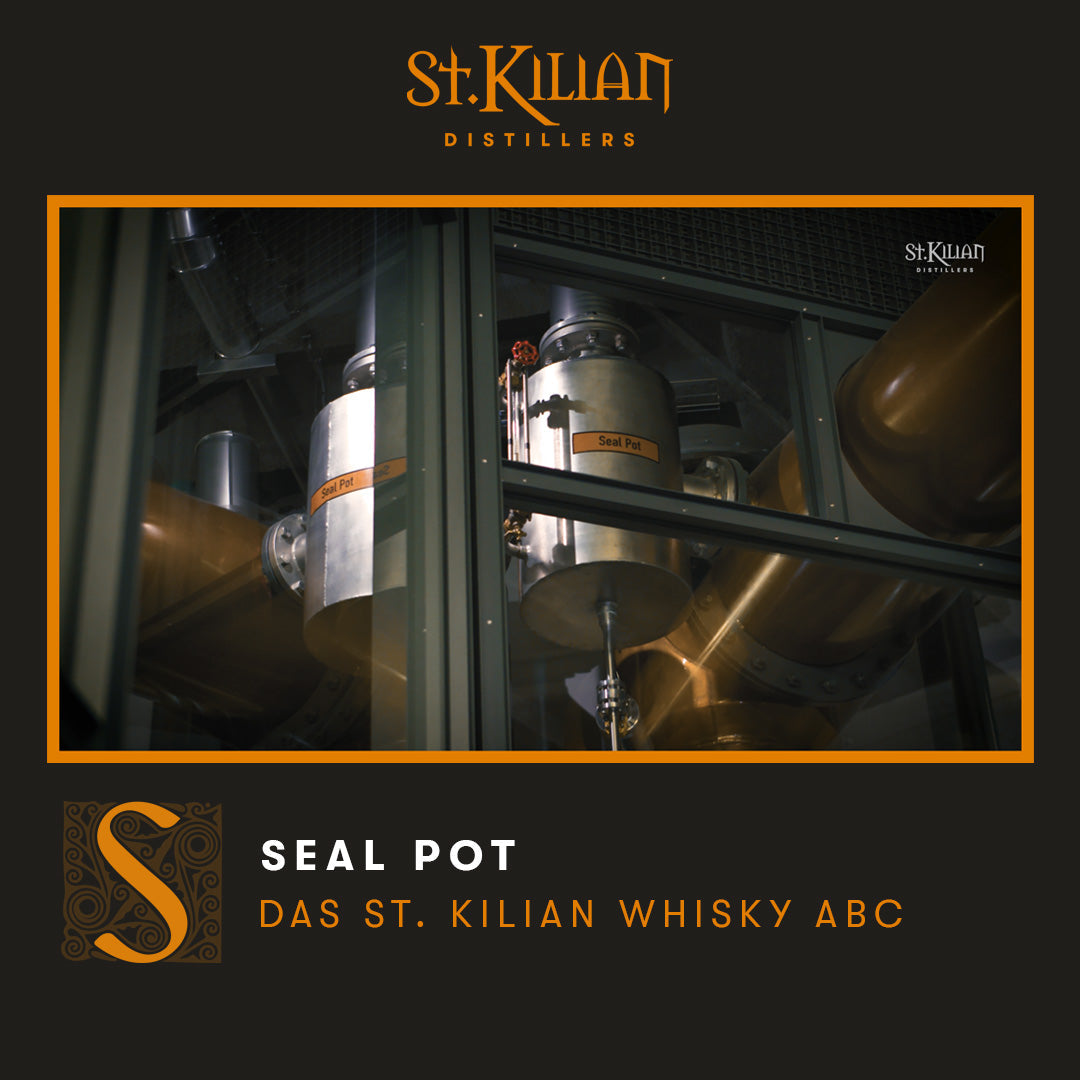

What is a Seal Pot?
A seal pot is a special stainless steel container that is attached directly to the lyne arm between the still (pot still) and the condenser.
What is a Seal Pot used for?
The seal pot mechanically balances a possible pressure difference (overpressure and negative pressure) in the distillation plant. This is a very important safety function.
How is a Seal Pot constructed?
The seal pot consists of a simply constructed stainless steel vessel with a structurally defined water seal inside. Water is filled into the container from below until it overflows into the lyne arm via the connection. The target water level in the seal pot is then reached and thus indicates the normal pressure.
Why must the pressure in the still be measured?
Although pot stills are made of sturdy copper sheeting, they are only a few millimeters thick. Such a still cannot tolerate overpressure, and even less can it withstand negative pressure or vacuum. In the worst case, overpressure would cause the pot still to burst, while a vacuum would crush it like a can.
Why do pressure differences occur at all?
There are process-related circumstances that can lead to higher or lower pressures in the still. The weather conditions alone – high or low pressure – have a fundamental influence on the pressure conditions. A slight blockage or clogging in the condenser or in the downstream subcooler during distillation can lead to increased pressure in the still. A sudden drop in steam due to a technical malfunction of the flash steam generator, on the other hand, can be the cause of a possible negative pressure in the pot still.
How does a Seal Pot work?
In the event of an overpressure in the still, the water in the seal pot is pushed up through a pipe, which is also located inside the vessel and runs vertically upwards to above the roof of the production building. In this way, the pressure can escape, and in the maximum case, the water would be completely pushed out of the pipe. Conversely, in the event of negative pressure or vacuum, the water is drawn from the seal pot through the lyne arm into the still until the stainless steel vessel is empty. In both cases, a complete pressure equalization with the outside air is ensured, thus preventing damage to the distillation plant.
What are the maximum values for overpressure and negative pressure at St. Kilian?
The height of the water column determines how much overpressure or negative pressure the still can withstand. During the planning phase of the St. Kilian distillery, a maximum overpressure of +190 mbar (+0.19 bar) and a maximum negative pressure of -20 mbar (-0.02 bar) were calculated based on the existing technical drawing. This means that the constantly monitored water level reacts even at these extremely low values. A very sensitive safety system – simple, but highly effective.
How many Seal Pots has St. Kilian installed?
There are two copper stills in the stillhouse of St. Kilian Distillers, the wash still and the spirit still. Therefore, a total of two seal pots, one per still, are installed on the slightly ascending lyne arm.
Are there any other pressure safeguards?
In production facilities in Scotland and other countries, seal pots are a completely sufficient technology for protecting stills. In Germany, additional technical measures are required. For example, St. Kilian Distillers has additionally installed highly sensitive measuring technology from Siemens for each pot still. These electronic instruments measure possible overpressure or negative pressure. If the permissible pressures are exceeded or fallen short of, the steam for distillation in the pot stills is automatically switched off (keyword: hardware interlock).


Leave a comment
This site is protected by hCaptcha and the hCaptcha Privacy Policy and Terms of Service apply.