



News from Master Distiller Mario Rudolf - June 24, 2020
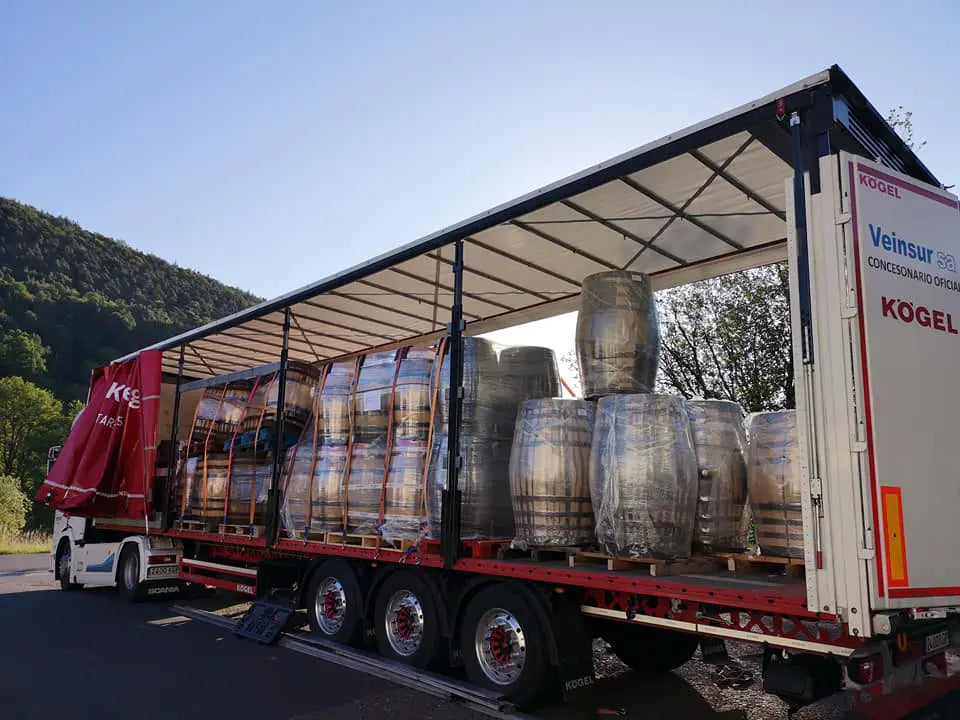
On German Whisky Day, June 27, 2020, we at St. Kilian introduced our new Signature Edition FIVE. "Five Virgins" - five fresh, unused cask types were incorporated. A true explosion of aroma with lots of spice, herbs, and pleasant woody notes combined with vanilla and sweetness.
How does cask emptying work?
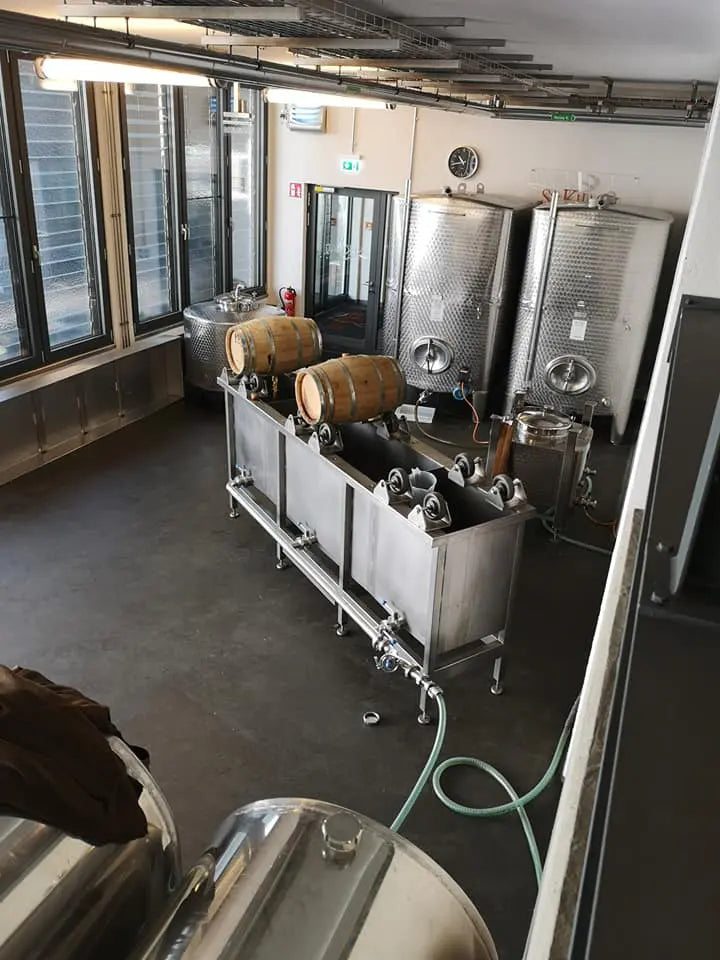
Here we show you how we empty our casks for this purpose. Parts of the new Signature Edition FIVE were in all the emptied casks....


The casks are placed on a stainless steel trough specially designed for us for emptying, with the bung hole facing upwards. They then rest on practical rollers so that they can be easily rotated 180 degrees over the bung hole for emptying. Then the cask empties completely. It is turned back and forth a little - done and empty! Each cask is emptied into a separate trough. Three troughs allow three casks to be emptied simultaneously.
How is the alcohol content determined?
Separate troughs are necessary for customs reasons, because the alcohol previously layered in the cask mixes during emptying. A sample is then taken from each. The alcohol content is then determined using calibrated hydrometers. By weighing the full cask before emptying and the empty cask afterwards, the weight is determined. The actual amount of alcohol is then determined using an official alcohol table and the "alcohol density" lA / 1000kg mixture, based on weight and alcohol content in vol%.


Then we pump the chambers into a blending tank. In this tank, all the casks are married to create the composition we envisioned. If necessary, it is diluted with demineralized water to the desired alcohol content. Afterwards, it is filtered. With us, it's warm and quite "coarse". No chill filtration, because St. Kilian wants to remove as little aroma as possible.

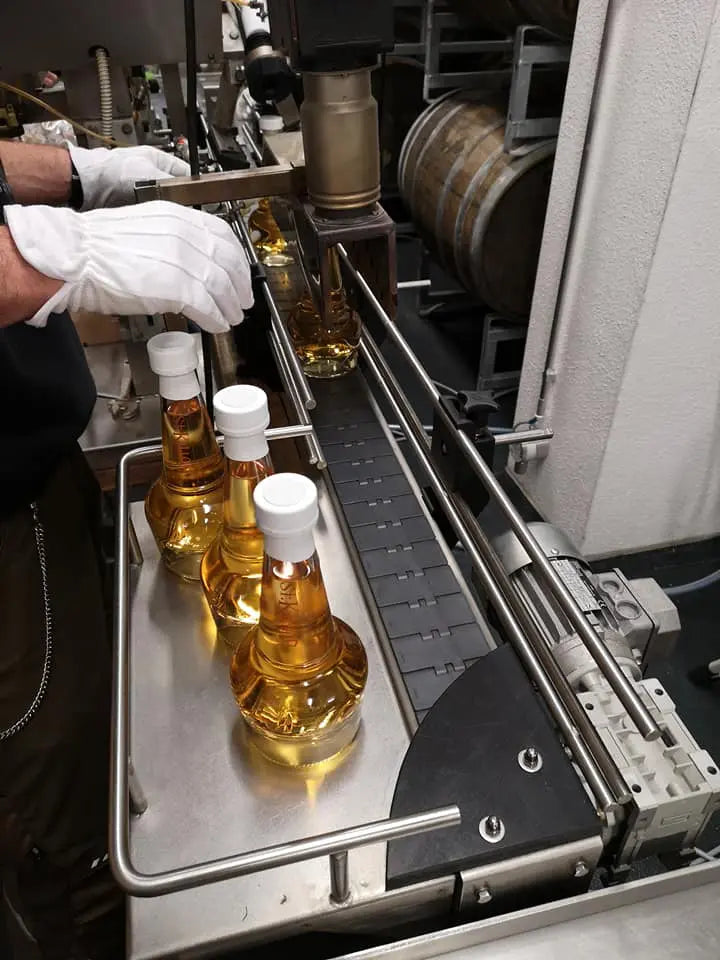
After a certain harmonization period in the tank, the whisky then only needs to be bottled and is ready for enjoyment.
What is the so-called Angels' Share?
Whisky fans love it: the pleasant and typical smell of wood and whisky, which is particularly characteristic when visiting the warehouse. The reason for this special smell is the evaporation of whisky during its storage in casks, also known as the "Angels' Share."
Loosely translated, we are talking about the "share of whisky that the angels get", which, unfortunately, is lost for later bottling. During this evaporation process, there is so much alcohol in the air that you can perceive it very clearly during a distillery visit.
Not only with your nose, but also with your eyes, you can recognize the alcohol: in the form of blackened objects and walls near the distillery. The black discolorations are caused by the fungus "Baudoinia compniacensis," which actually feeds on the evaporated alcohol.
How high is the Angels' Share?
How much percentage per cask and year evaporates depends on its environmental factors such as humidity, temperature, and air pressure, and in whisky production, 1-2% per year is assumed. In hot countries like the Caribbean, this is much higher than in cool Scotland. To keep the angels' share as low as possible, attention is paid to a cool and humid climate in the warehouse. Furthermore, the size of the cask also plays a major role, because mathematically, the proportion of the Angels' Share in small casks, which are often used at St. Kilian, is much larger than in large casks.
Regular accounting is then done with customs. How high was the loss per year actually? Up to 4% per year is allowed in Germany. Anything beyond that must be taxed. Even if it's no longer there and no one could enjoy it!

Leave a comment
This site is protected by hCaptcha and the hCaptcha Privacy Policy and Terms of Service apply.