



How many cask types does St. Kilian have?
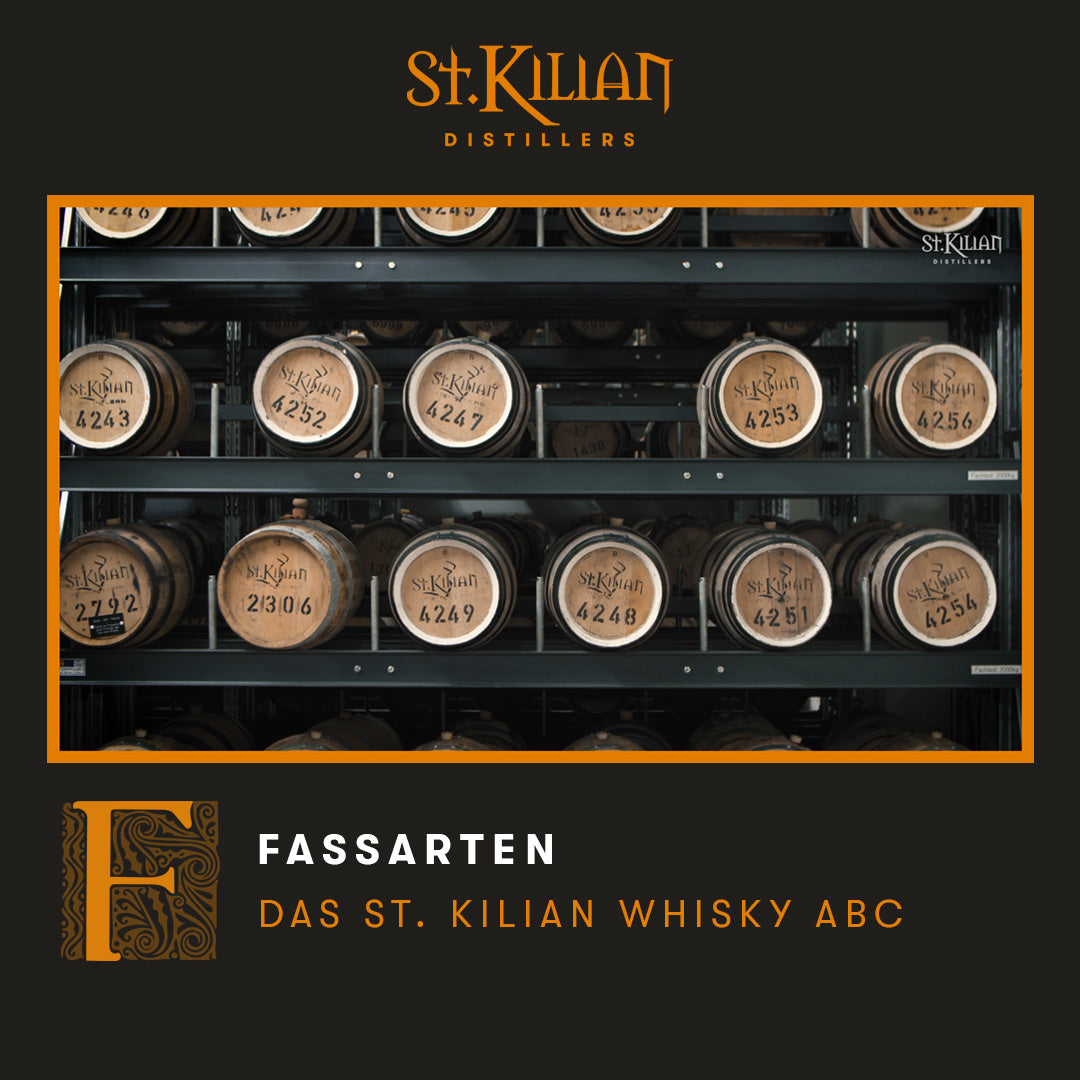
St. Kilian certainly does not lack cask types. We currently have over 370 different cask types and sizes in our maturation warehouses. For example, a Bourbon cask of 50 liters and one of 190 liters are counted as two cask sizes.
Does every distillery have such a variety of casks?
Most likely not. We are one of the very few distilleries worldwide that boasts such a wide variety of different cask sizes and wood types. This underscores St. Kilian's enormous experimental drive.
Which casks are mainly used at St. Kilian?
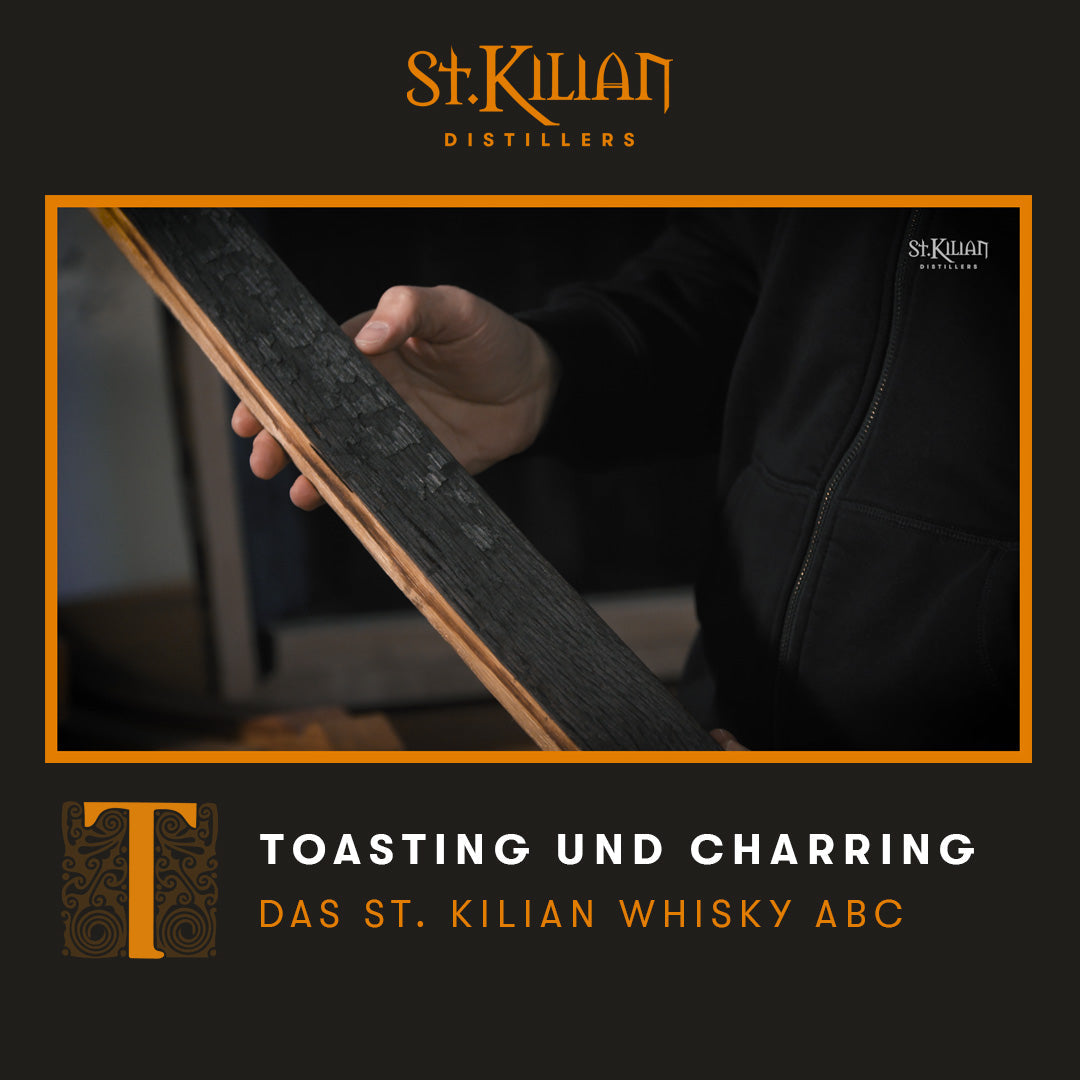
The most commonly used cask at St. Kilian is the American Bourbon cask. We have sizes ranging from 20 liters, to 50 liters, up to the standard cask, the American Standard Barrel, with a capacity of 190 liters. American Bourbon casks are made of American white oak, which is charred on the inside by a cooper and then filled at the distillery with the New Make Spirit, also known as White Dog. After years of maturation, the Bourbon casks are emptied and offered for sale on the international market.
What aromas do used Bourbon casks impart?
When the former Bourbon casks arrive at St. Kilian in Rüdenau from the USA and are filled with our New Make, these casks release the typical Bourbon notes of vanilla and caramel into the maturing distillate over the years of maturation.
What other casks are available on the market?
Fortunately, a plethora of beverages, spirits, and other products are stored or matured in casks worldwide. Casks that have found their way to Rüdenau include, for example, those that previously held Sherry. These Sherry casks come from Andalusia, Spain, from the Sherry region of Jerez, and impart wonderful aromas of dried fruits, Sherry, raisins, chocolate, and spices. Other casks used at St. Kilian include those previously filled with Apricot Brandy from Turkey. But we also fill former French Pineau des Charentes casks, Sauternes casks from Bordeaux, Mexican Tequila casks, Tabasco, herbal liqueur, or Bock beer casks.
Are former wine casks also used at St. Kilian?
Yes, of course. Red wine casks, in particular, are highly sought after because they impart wonderful aromas of red fruits to the spirit and give it a hint of tannins, which harmonize beautifully with the matured whisky and give it structure and mouthfeel. Red wines from France, Spain, or Germany mostly mature in 225-liter barrique casks, while wines from Burgundy mature in special 228-liter casks. These cask types are usually made of European oak and were only toasted before being filled with wine, not charred like the Bourbon casks from the USA.
What advantages does the use of pre-filled casks offer?
During the pre-filling with Bourbon whiskey, sherry, port wine, wine, or beer, the individual staves of the cask soaked up these liquids, as oak wood behaves like a sponge and eagerly absorbs liquid. If such a cask is now filled with a spirit of higher alcohol content after emptying, then over time during maturation, these components will be extracted from the staves by the maturing distillate and combined with it. The flavors from the pre-filling thus represent a source for the complex variety of aromas in the matured whisky.
Are unseasoned casks also used for maturing whisky?
Yes, indeed. Not every charred cask made of American white oak is filled with "White Dog" (New Make Spirit) in the USA; some are sold. Such fresh, "virgin" casks impart more intense woody notes to the maturing distillate. Fresh, unseasoned casks made from Palatinate oak, Hungarian oak, or the very rare Japanese Mizunara oak are also filled with spirit and stored in St. Kilian's maturation warehouses. Since other types of wood besides oak are permitted for whisky maturation in the European Union, we can, for example, use casks made from mulberry wood or Swiss pear wood, wild robinia (false acacia), ash, cedar, chestnut, or cherry. A wonderful example of the interplay of aromas from different woods and the influence of maturation is the St. Kilian Signature Edition Thirteen.
What sizes are the casks?
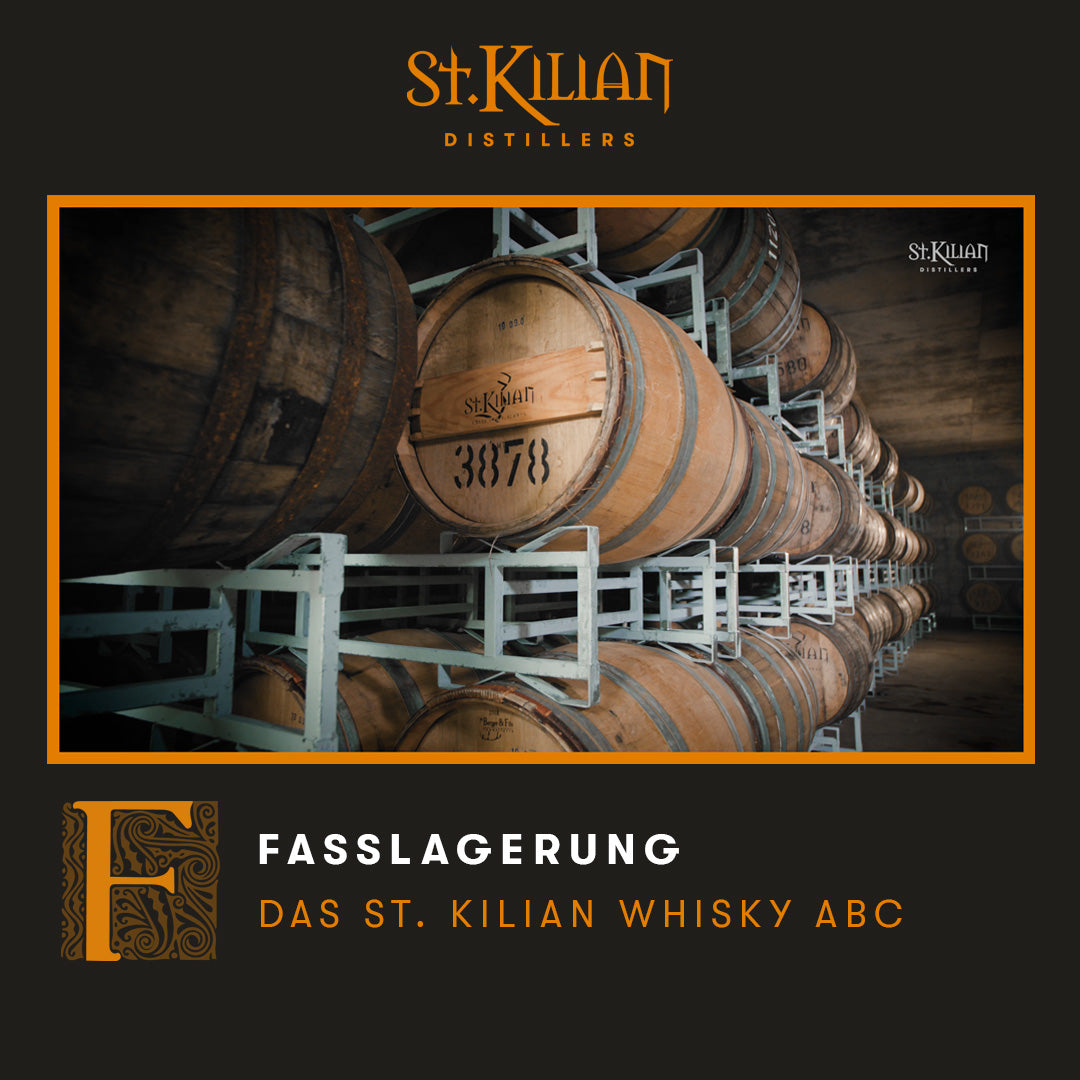
In the whisky industry, the upper limit for a whisky maturation cask is set at a volume of 700 liters. St. Kilian cask number 1 has this maximum volume of 700 liters. In the warehouses in our Bunker City, various cask types mature in sizes from 20 liters up to those 700 liters.
Does cask size influence maturation?
Yes. The spirit matures significantly faster in smaller casks than in larger casks. This is due to the wood surface area available to the maturing spirit. According to the laws of physics, the smaller the cask, the greater the ratio of wood surface area to spirit volume. This means that in a smaller cask, there is more intensive contact between the maturing distillate and the wood. In a larger cask, however, the spirit matures more slowly, more gently, and the whisky becomes somewhat more harmonious, as the wood influence is less. The liquid loss from a cask during maturation ("Angel's Share") is proportionally higher in a smaller cask than in a larger cask.
How significant is the influence of the cask on the maturing whisky?
According to experts, approximately 60 to 80 percent of a whisky's final taste can be attributed to the cask's influence during years of maturation. However, the quality of both the spirit and the wood must be equally high. A low-quality distillate with many off-notes will not mature into an excellent whisky, even in the best wooden casks. Conversely, a very good New Make Spirit filled into a lower-quality wooden cask (e.g., a mold-contaminated cask) can at best only produce a mediocre whisky.
How old can the casks get?
Wooden casks can become very old. Oak wood, in particular, is very hard and extremely durable. Without physical damage, oak casks can easily be in use for 100 years or more. An example of this is the Solera casks used for maturing Sherry. In terms of whisky, a cask – depending on the distillery's philosophy – is usually filled with spirit two, three, or even four times consecutively. However, with each filling of the cask, the influence of the wood on the aroma of the matured whisky decreases, so that further refilling of the cask is no longer economically viable, and it is retired. Yet, precisely this lack of wood influence is desired in Sherry, because the oak wood of the Solera cask is not supposed to impart any aromas to the wine, but merely serve as a dense container. Thus, these Solera casks, which usually hold 600 liters and are generally made of American white oak, can reach a very old age. Such Solera casks are highly aromatic and extremely sought after by whisky producers. This is because their staves, soaked with ready-to-drink Sherry over a very long maturation period, impart wonderful aromas to the maturing whisky.

Leave a comment
This site is protected by hCaptcha and the hCaptcha Privacy Policy and Terms of Service apply.