


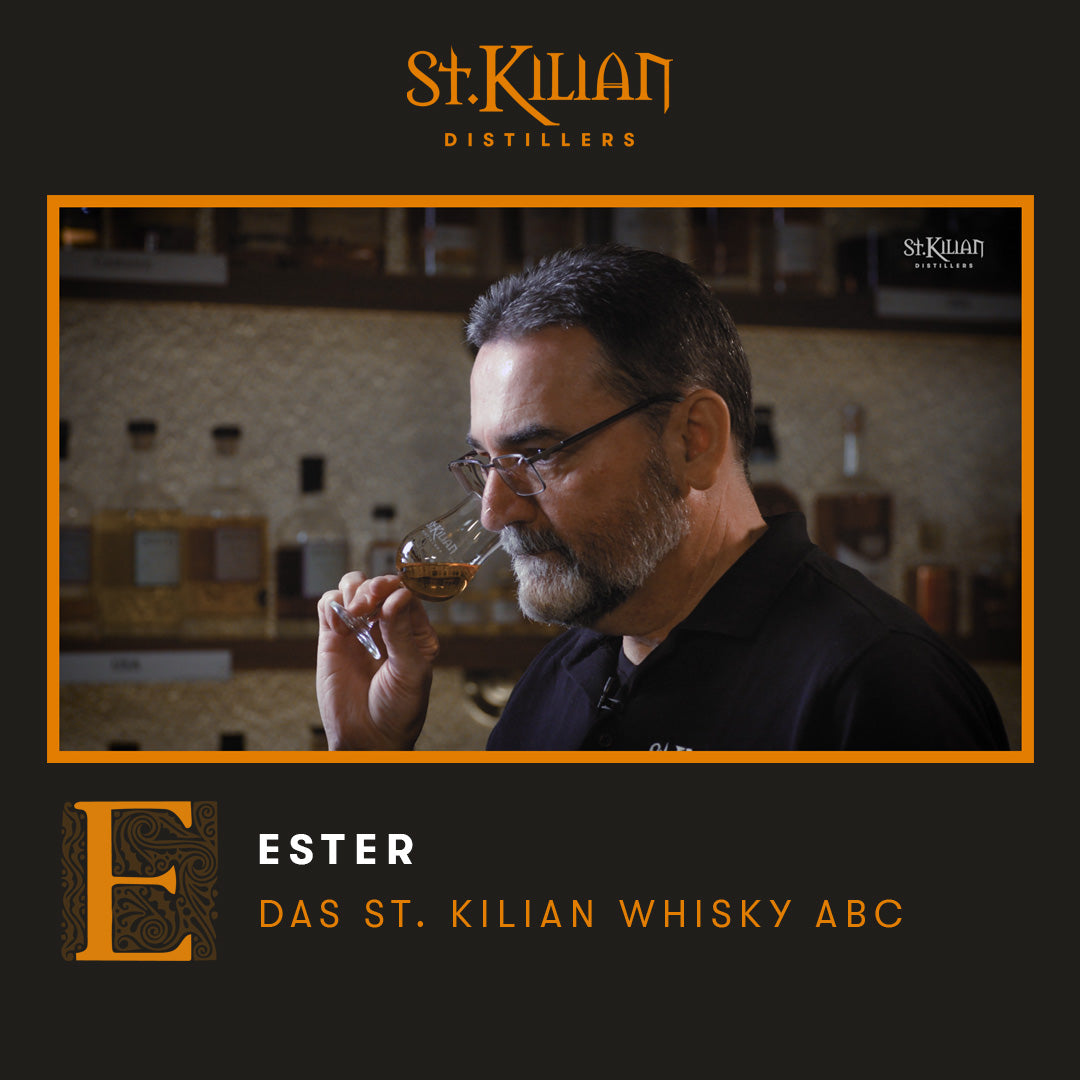

What are esters?
Esters are chemical compounds formed by the reaction of an acid with an alcohol. In chemistry, they represent a distinct class of compounds.
How does this chemical reaction to esters work?
Alcohols react with organic acids (e.g., acetic acid, lactic acid) or inorganic acids (e.g., sulfuric acid, phosphoric acid) in the presence of a catalyst and with the elimination of water to form a new class of compounds, the esters. This reaction is called esterification. Chemically, it is a condensation reaction because water is split off. Simply put, an ester can be imagined like a two-component adhesive: Component 1 (= alcohol) combines with Component 2 (= acid) and hardens under displacement of water as a mixture (= ester).
Who discovered esterification?
The German chemist and Nobel laureate Hermann Emil Fischer (1852 - 1919) first described this reaction between acids and alcohols at the end of the 19th century. It is therefore also known in specialist literature as "Fischer esterification."
Are there well-known examples of esters?
Yes. For example, naturally occurring fats are esters, as they are composed of the alcohol glycerol and various organic fatty acids. These special esters are called triglycerides. They are absorbed through food and represent important energy stores in the body.
What special properties do esters have?
Numerous esters have a distinct fruity aroma and are therefore used as flavoring agents. Such esters are also largely responsible for the fruity smell and taste of a new make spirit or whisky.
Can esters be detected in whisky?
Yes. The often fruity notes in whisky – such as the aroma of tropical fruits (pineapple, banana), berries (blackberry, strawberry, raspberry), plums, cherries, rum-soaked raisins, coconut, cinnamon, star anise, or mint – are due to the existence of different esters.
Where are esters formed during whisky production?
Esters are mainly formed during alcoholic fermentation by the yeast. However, they are also formed during distillation and the years of maturation in wooden barrels from existing alcohols and acids.
How does ester formation work in the distillery?
During fermentation, yeast cells convert sugar into ethanol and carbon dioxide, producing a variety of byproducts, including esters. Nearly 100 different esters have been identified in the resulting wash after fermentation. Other natural byproducts of fermentation include various alcohols and organic acids. When these evaporate during the subsequent distillation of the wash in the pot stills and hit the hot copper surface, they can react with each other to form different esters, which later enter the distillate – the collected middle cut.
Which ester is predominantly formed in the cask?
Various esters are also formed during the years of maturation in wooden casks through the chemical reaction of alcohols with acids. The most frequently found ester is the compound formed from the alcohol ethanol and the acid acetic acid. This substance is chemically known as ethyl acetate. This ester is continuously formed in the cask during maturation, with the amount of ester steadily increasing over the years in the cask. Thus, the amount of ethyl acetate in whisky is a measure of its maturation.
What aromas does ethyl acetate have?
In small quantities, ethyl acetate – i.e., the ester from acetic acid and ethanol – exhibits a pleasant fruity aroma reminiscent of green apples. As the aging whisky gets older, the amount of this ester also increases and can reach a concentration range where an unpleasant glue-like odor develops. The perceived aroma of an ester therefore depends on its quantity, i.e., its concentration.
What aromas do the esters in whisky have?
Esters can create a wide range of aromas and flavors in whisky. These range from fruity and floral notes to spicy-herbal and woody tones. Exemplary examples of ester aromas in St. Kilian whisky include pear, apricot, peach, apple, vanilla, coconut, and mint.
Which esters are responsible for this?
For example, a pear aroma is caused by an ester formed from acetic acid and propanol (= propyl acetate). The ester from butyric acid and ethanol (= ethyl butyrate) has a distinct peach aroma in addition to the smell of pineapple, while the ester from butyric acid and pentanol (= pentyl butyrate) smells of apricot. If the alcohol pentanol reacts with valeric acid, the corresponding ester (pentyl valerate) has a clear apple aroma. An ester from benzoic acid and ethanol (= ethyl benzoate) is responsible for the smell of mint.
What factors influence the formation of esters during whisky production?
The exact composition of the fruit aromas present in a whisky depends on various factors. These include, for example, the raw materials used, the yeast strain, the duration and temperature control during the fermentation process, the course of distillation (temperature, speed, cut points), the storage conditions, and the type of casks used for maturation. Each whisky can therefore have a unique composition of ester aromas, contributing to its individual and characteristic olfactory and taste profile.
Do you always need two separate reactants for ester formation?
Not necessarily. While an acid and an alcohol are always necessary for the formation of an ester, they do not necessarily have to be two separate molecules. There are chemical compounds that possess both groups – i.e., the acid and the alcohol group – within the same molecule, at different positions within the molecule. Under suitable conditions, the acid and alcohol groups in this molecule can react with each other. The result is then a cyclic ester, which in chemistry is called a lactone. Such lactones actually exist and occur, for example, naturally in oak wood. American white oak contains many of these special lactones, which have an aroma and taste of coconut. These lactones are referred to in the technical literature as whisky lactones or quercus lactones.

Leave a comment
This site is protected by hCaptcha and the hCaptcha Privacy Policy and Terms of Service apply.