



Which wood types are permitted in the EU for maturing whisky in casks?
According to European Spirits Regulation 2019/787, to which we are, of course, subject, it is not strictly necessary for whisky to mature exclusively in oak casks. Rather, the maturation vessels merely need to be made of wood with a maximum capacity of 700 liters. This gives us the opportunity – unlike in Scotland – to mature our spirit in casks made of chestnut, black locust, beech, or cherry. This is one of the reasons for St. Kilian's immense spirit of experimentation.
Which wood type is most frequently used at St. Kilian?
Similar to many distilleries worldwide, the vast majority of our new make also matures in oak casks. These are often former Bourbon casks from the USA, but we also use casks that previously held sherry, port wine, cognac, rum, beer, or wine. In addition, we use a large number of so-called Virgin Oak casks.
What is a Virgin Oak cask?
A Virgin Oak cask is a freshly crafted oak cask that has been prepared internally by either charring or toasting, but has not yet been filled with whisky or other spirits (or wines, beers, etc.). Each type of oak contributes different aromas to the maturing distillate, which can naturally vary depending on the origin of the wood and the type of cask.
What makes Swedish oak so special?
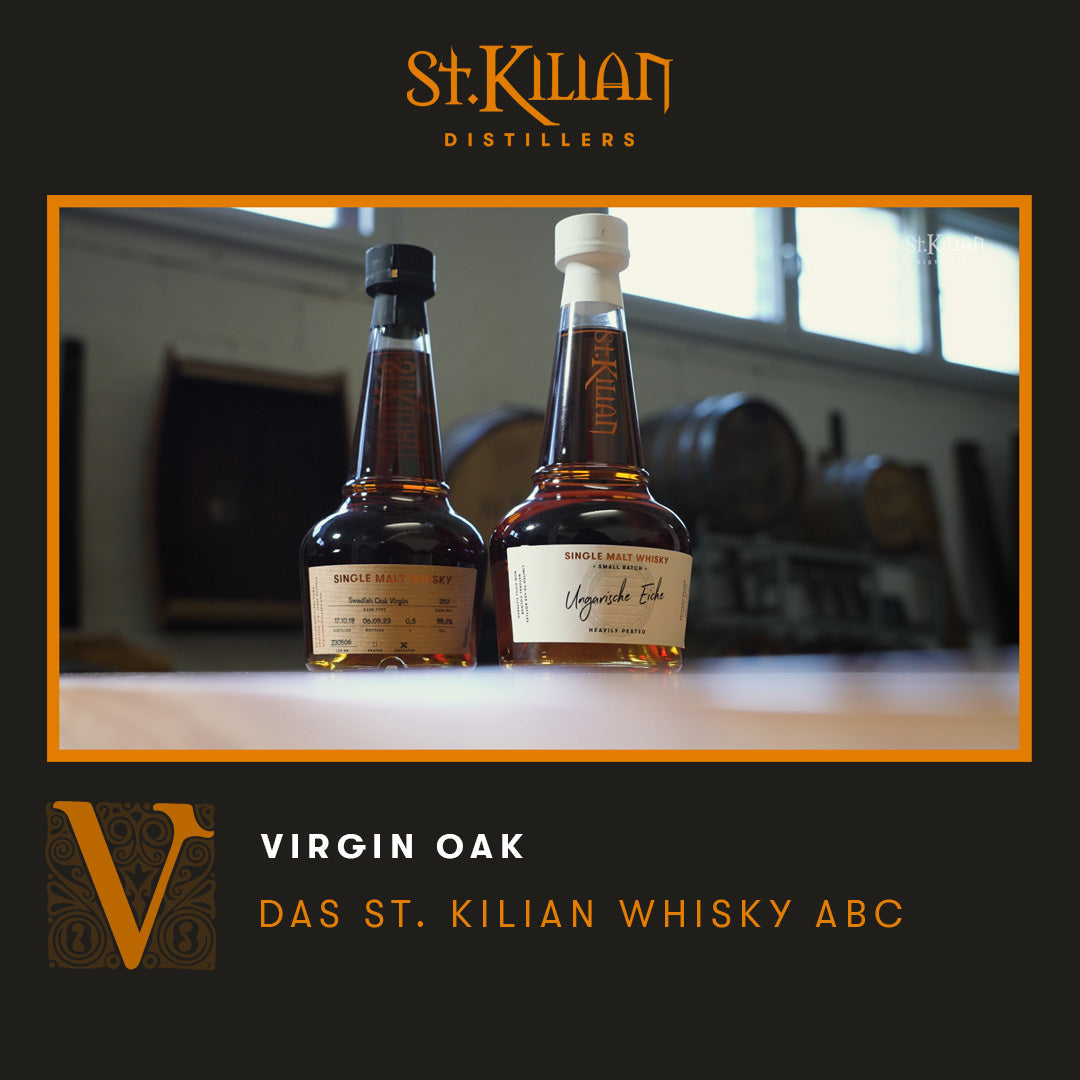
Swedish oak imparts a pleasant spiciness to whisky with nuances of pepper or other spices. In addition, Swedish oak tends to impart fruity elements such as apples or pears to the distillate. Fine herbal notes and floral aromas complete the profile that this wood gives to the whisky. The St. Kilian bottling of a single malt whisky from 2023, matured in an unused Swedish oak cask, impressively confirmed the aromatic complexity of this wood.
What aromatic profile characterizes Hungarian oak?
Hungarian oak is characterized by its intense spiciness, which usually manifests itself with notes of cloves or pepper. Additionally, Hungarian oak enriches the whisky with dark fruit aromas such as plums, raisins, or dried fruits and lends it a subtle sweetness that rounds off the whisky's flavor profile. At St. Kilian, we particularly enjoy using casks made from fresh Hungarian oak. We often source these from the company Dolium, which obtains its wood from southeastern Hungary.
What can be expected from fresh Spanish oak?
The aromas that fresh Spanish oak imparts to the maturing distillate are similar to those of fresh Hungarian oak. It brings forth aromas of dried fruits such as raisins or dates and can contribute vanilla notes as well as a subtle creamy sweetness. In addition, spice notes such as cinnamon and cloves are characteristic of Spanish oak.
How does American white oak differ from European oak species?
Many casks made of fresh American white oak are stored in our warehouses in Bunker City. This wood is known for its distinct vanilla notes. Thanks to the abundant presence of whisky lactones in this wood – which are cyclic esters known for their characteristic coconut aromas – the maturing whisky develops a creamy texture. Also typical for whiskies aged in American white oak are caramel notes and a clear presence of oak wood, accompanied by spicy elements.
Are only the different wood types responsible for the whisky's aroma?
No. During cask maturation, the aromas of the whisky are also influenced by a variety of other factors, including the duration of maturation, the size of the cask, the type of warehouse, and the climatic environment in which the casks are stored.


Leave a comment
This site is protected by hCaptcha and the hCaptcha Privacy Policy and Terms of Service apply.