




What does milling do?
For the production of single malt whisky, the grains of barley malt are first crushed into grist in a mill so that the important ingredients – such as starch, sugar and proteins – can be processed later in the production. For this to succeed optimally, the composition of the milled malt must have a very specific ratio.
Why is barley malt milled?
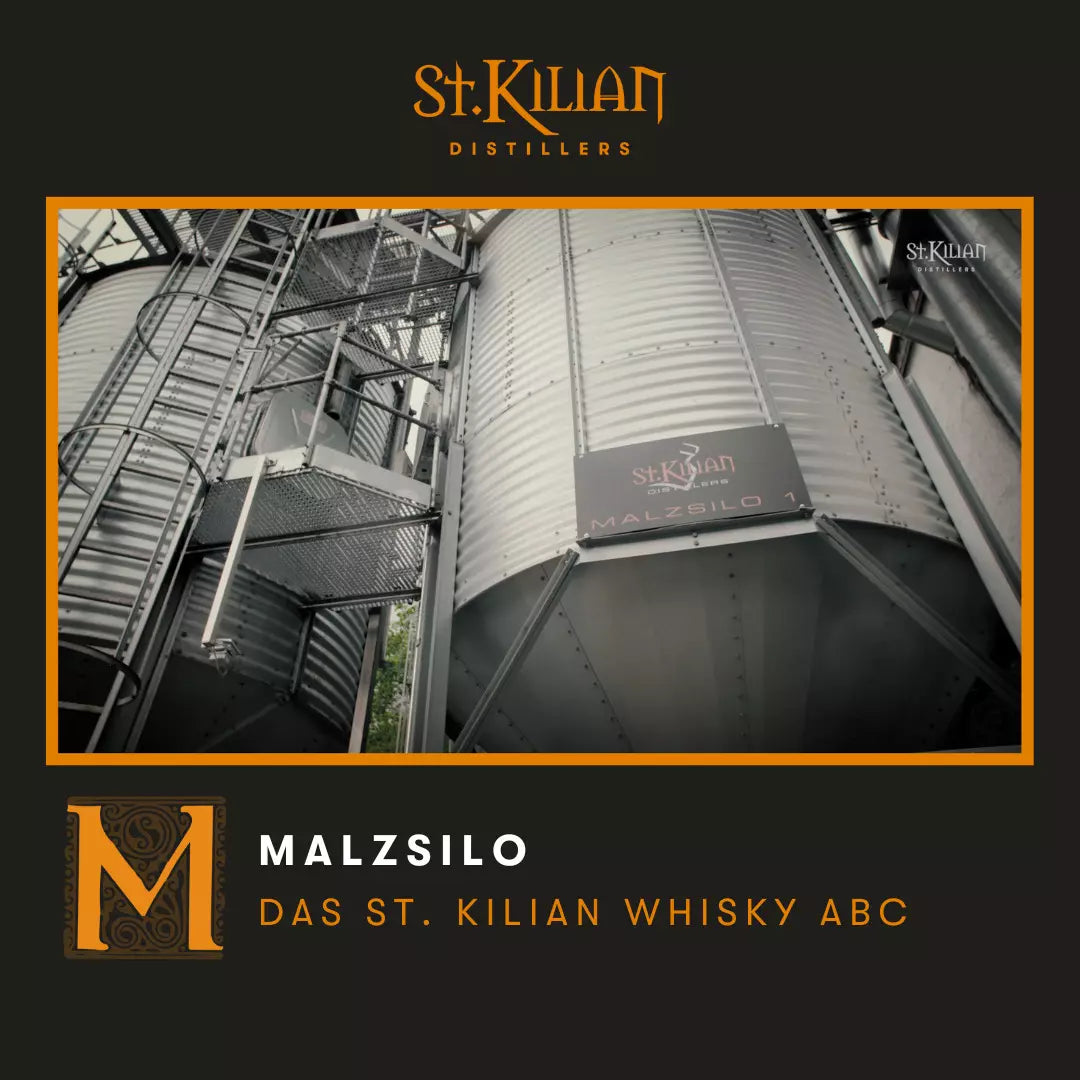
In preparation for the next production step, mashing, the barley malt is coarsely ground. This is done here in a special apparatus: a four-roller mill. For this, the amount of malt, 2.2 to 2.5 tons, taken from our malt silos and controlled by a built-in scale, is conveyed directly to the dry mill. This consists of four hardened rollers, which ensure an excellent milling result for our barley malt.
What is the milling result?
Milling is a very important production step. This is because we cannot process barley malt in the form of whole grains, as the ingredients – starch, sugar and proteins – cannot be accessed. Therefore, the barley grains must be broken open, i.e. milled. This is done in our mill using two pairs of rollers. The milling result is of great importance. The percentage distribution of the three components of barley malt grist in many distilleries is within the following range:
- 70 - 85% starch or grits
- 10 - 20% husks
- 5 - 10% flour
How is the milling result controlled?
The milling result is checked with a simple method: a shaking sieve. This wooden sieve box consists of a lid and a base, as well as two layers in between, each equipped with a sieve of different mesh sizes. If exactly 100 g of the malt grist is placed on the upper sieve, the box is closed with the lid and shaken manually, then the husks remain on this upper, coarser sieve, the starch or grits on the slightly finer sieve of the layer below, and the flour on the base of the sieve box. By weighing the individual components, a control over the percentage composition of the grist is obtained and, if necessary, the grinding degree can be adjusted accordingly at the mill by changing the roller gap.
Why is this composition so important?
The correct mixing ratio of these three grinding degrees is particularly important for the subsequent mashing. Because the grist is mixed with hot water in the mash tun during mashing so that primarily the valuable sugar components of the malt can be extracted. This sugar-containing solution, the so-called wort, is filtered after a certain period of time through the sieve bottom of the lauter tun, our mash tun. On the way to the bottom, the liquid passes through the spent grain bed, which consists of the water-insoluble components of the barley grist. The husks in the grist provide air in the spent grain bed, so that it is relatively loose and thus easily permeable for the wort. If the husks are too small after milling and/or too few in number, then the spent grain bed compacts and the wort can no longer drain well and sufficiently. If, on the other hand, there is too much flour in the malt grist, then the wort becomes too sticky and can also no longer drain properly through the spent grain bed and over the sieve bottom in the lauter tun. Yield losses of sugar and the alcohol obtained from it would be the consequence.
What is the composition of the grist at St. Kilian?
After many test series, a milling result of
- 82% starch or grits
- 10% husks
- 8% flour
has emerged as the optimum for our productivity and represents an important step on the way to the finest St. Kilian Single Malt Whisky.


Leave a comment
This site is protected by hCaptcha and the hCaptcha Privacy Policy and Terms of Service apply.