


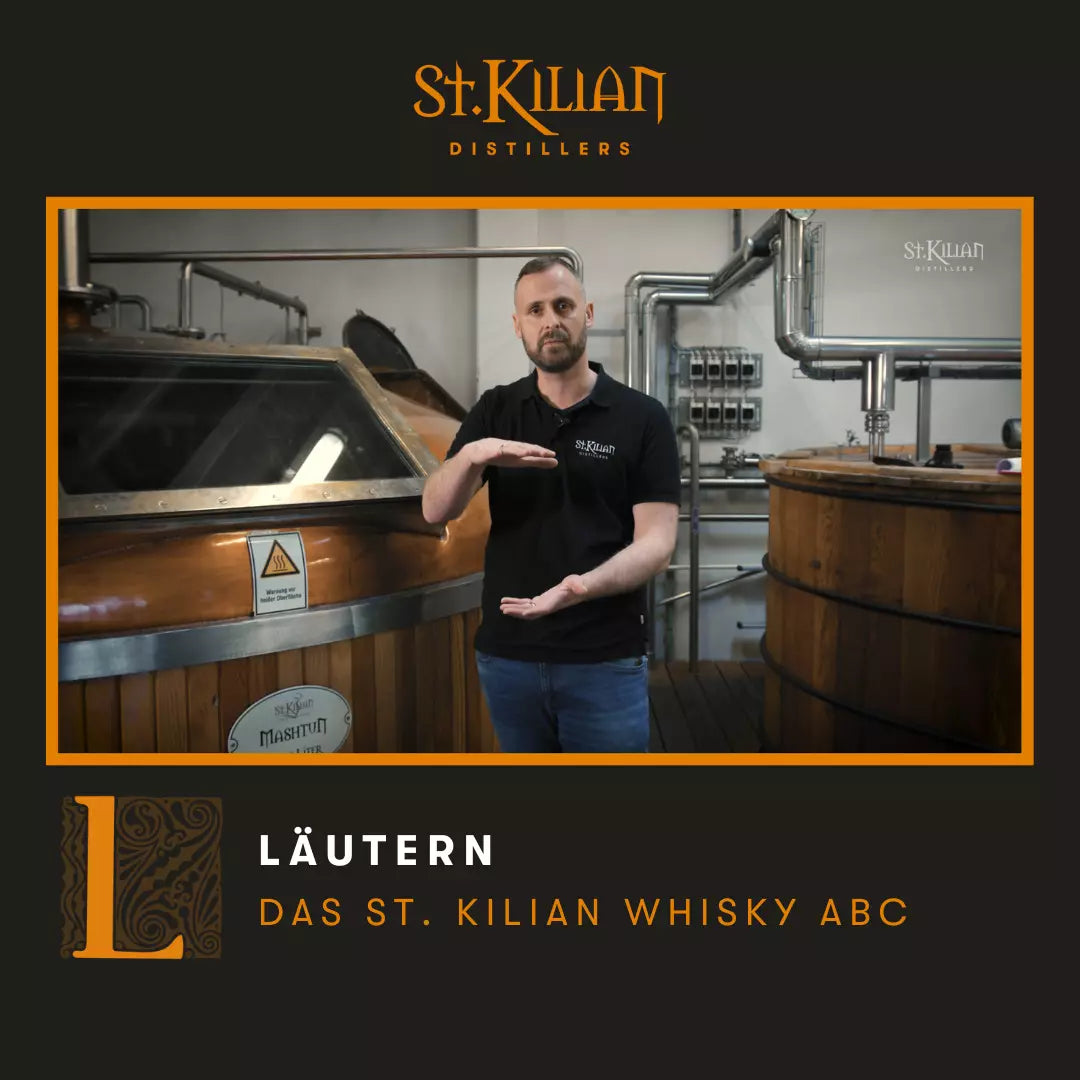

What does the term "Lautering" mean?
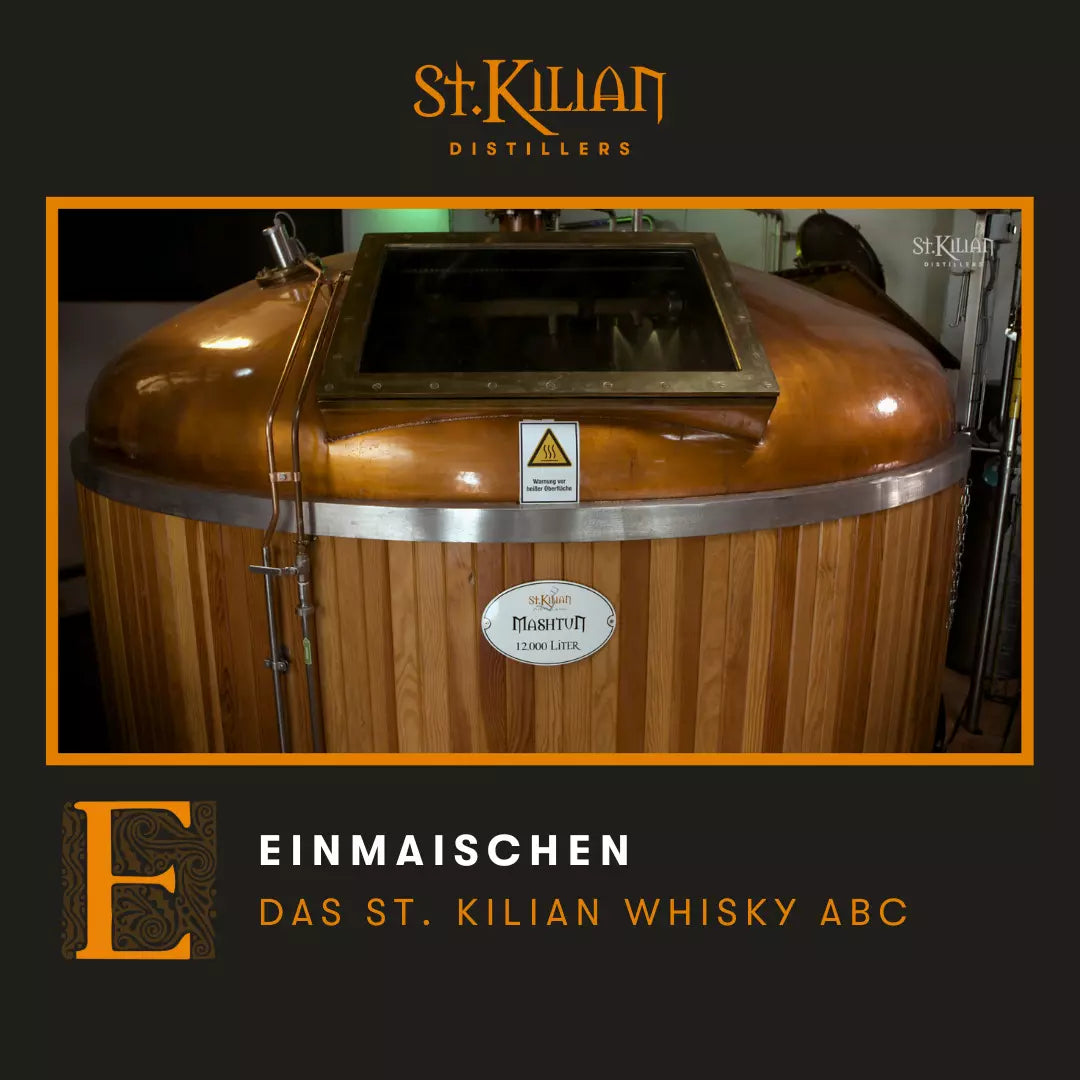
Lautering refers to the separation of solid from water-soluble components of the mash via the perforated screen of the lauter tun, also known as the mash tun.
What is separated?
The separated solution is called wort. It is an ocher to brownish, clear to cloudy liquid that essentially contains fermentable sugars, as well as amino acids and smaller protein fragments. The solid, water-insoluble components of the mash, known as spent grains, remain in the lauter tun.
What happens to the wort?
The sugary wort is cooled via a plate heat exchanger and transferred to our open, wooden fermentation vats – the washbacks – for the next production step. Alcoholic fermentation is then initiated by adding dry yeast. In contrast to some other methods in the whisky industry, where the entire mash, including the solid components of the barley grist, is fermented, we ferment exclusively with the soluble wort.
How is lautering performed in detail?
Lautering is a continuous process. First, the 63.5 °C hot mixture of grist and water is introduced into the mash tun, which is called mashing in. Then enzymatic processes occur, converting the starch in the barley malt into soluble, fermentable sugars and the proteins into amino acids. After about 30 minutes, the aqueous solution is filtered off from the solid, insoluble components, with the spent grains forming a filter bed over the perforated screen of the lauter tun, so that the wort runs off clear after a short time. While the wort is being filtered off, additional water at a now higher temperature is fed into the mash tun from above. This step is called "sparging". These process steps – lautering and sparging – are repeated two to three times, each time with increasing temperature of the added water, so that the enzymes can perform their work optimally in a temperature range from 63.5°C to about 80°C. Finally, the filtered wort is either collected in a collection tank or pumped directly into the fermentation vat. It now contains all the extractives from the barley malt that the yeast needs for successful fermentation in the next production step.
How can lautering be controlled?
Lautering can be traditionally controlled via the underback, which is connected to the lauter tun. This is an intermediate column through which the wort flows. In an optimal state, the liquid level of the drawn-off wort in the underback matches the level of the mash surface in the lauter tun. The underback thus maintains the hydrostatic equilibrium of the mash. Any difference in liquid levels is a good indicator of problems during lautering.
What is differential pressure measurement?
Lautering can also be controlled using a so-called differential pressure measurement. This is a more modern method compared to the underback and is exclusively used by us. If the spent grain cake compacts too much during lautering, making it difficult for the liquid to pass through, but is still sucked off below, a pressure difference arises above and below the perforated screen. This can be measured by integrated pressure sensors. In this case, the production team can counteract by readjusting the lautering speed. If necessary, the compacted spent grain cake can be loosened by the raking mechanism in our mash tun, thereby restoring its permeability for the wort.
What is the nature of the wort?
Generally, a cloudy wort promotes a richer style of distillate, while a clear wort results in a lighter, fruitier new make. At St. Kilian Distillers, we aim for a largely clear, subtly cloudy wort to emphasize the malt character in our new make. The nature of the wort is thus another influence and one of several factors that together determine the character of the new make spirit.
What is the prerequisite for optimal lautering?
The quality of the milled barley malt is a very important factor for optimal lautering results. The specific proportion of husks creates a loosened filter layer in the spent grain cake that is optimally permeable for lautering. Therefore, the upstream process, milling, plays an enormously important role.


Leave a comment
This site is protected by hCaptcha and the hCaptcha Privacy Policy and Terms of Service apply.